Buying a Commercial Motion Simulator: What Should You Look For?
Home rigs and commercial simulator rides share a name but not a job. Guests per hour by model, 3-DOF or 6-DOF, and what to check before you buy one for an attraction.
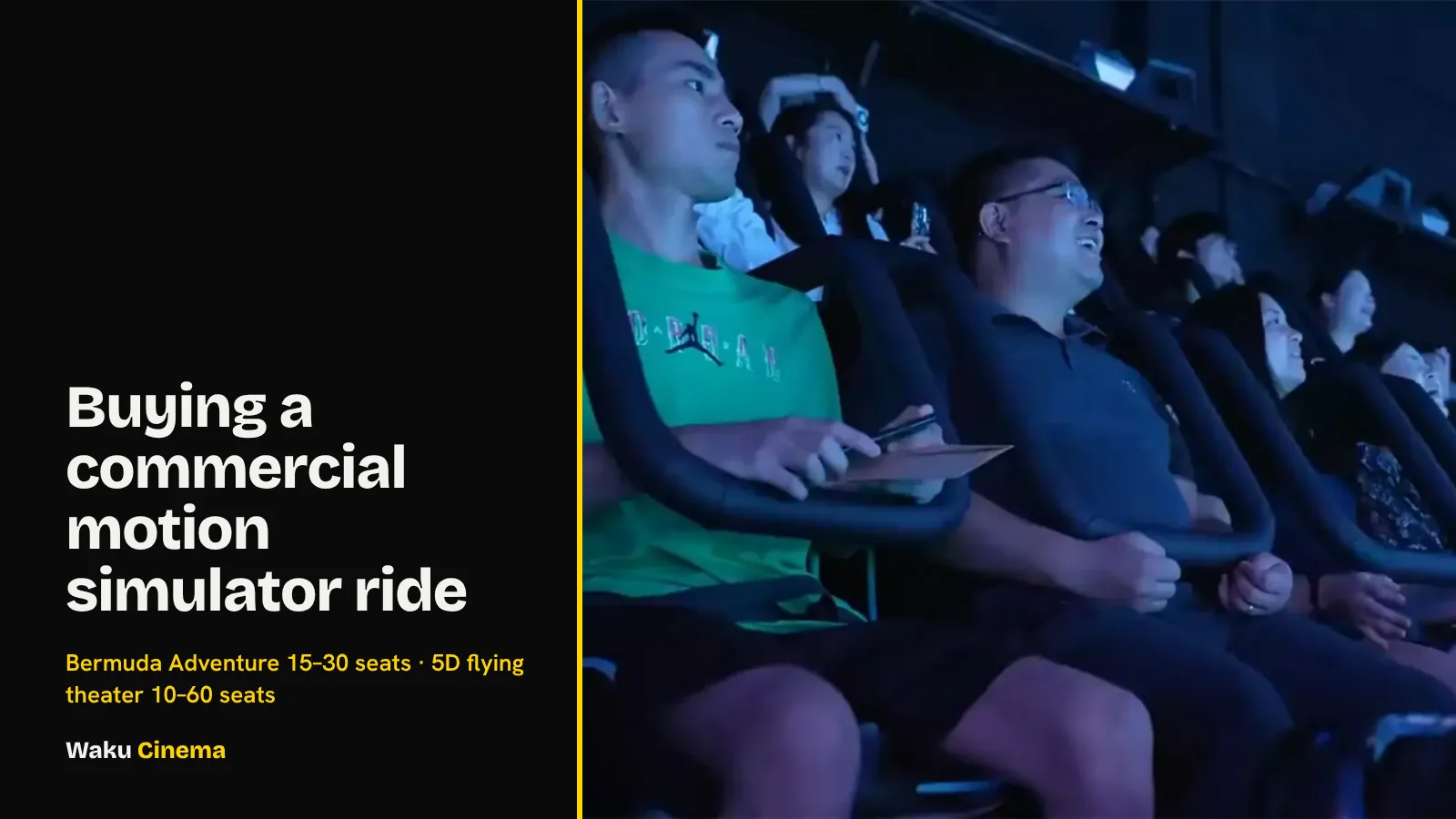
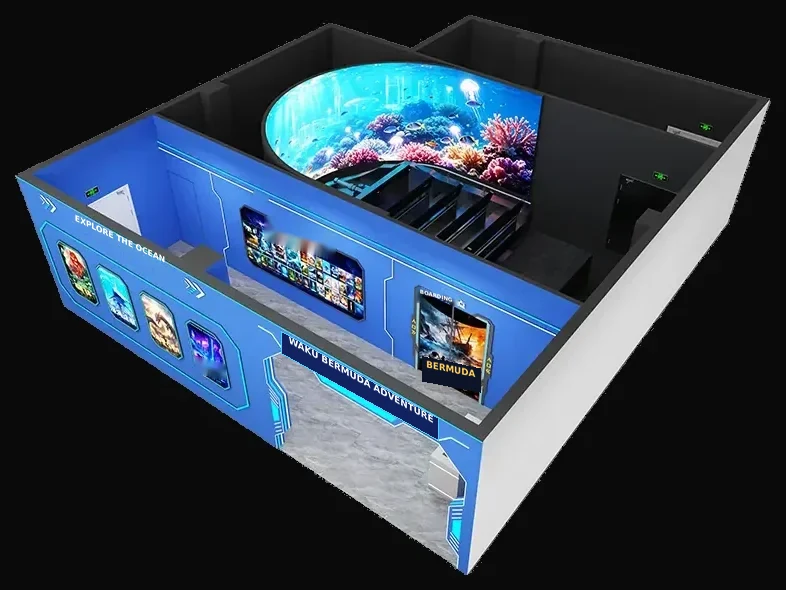
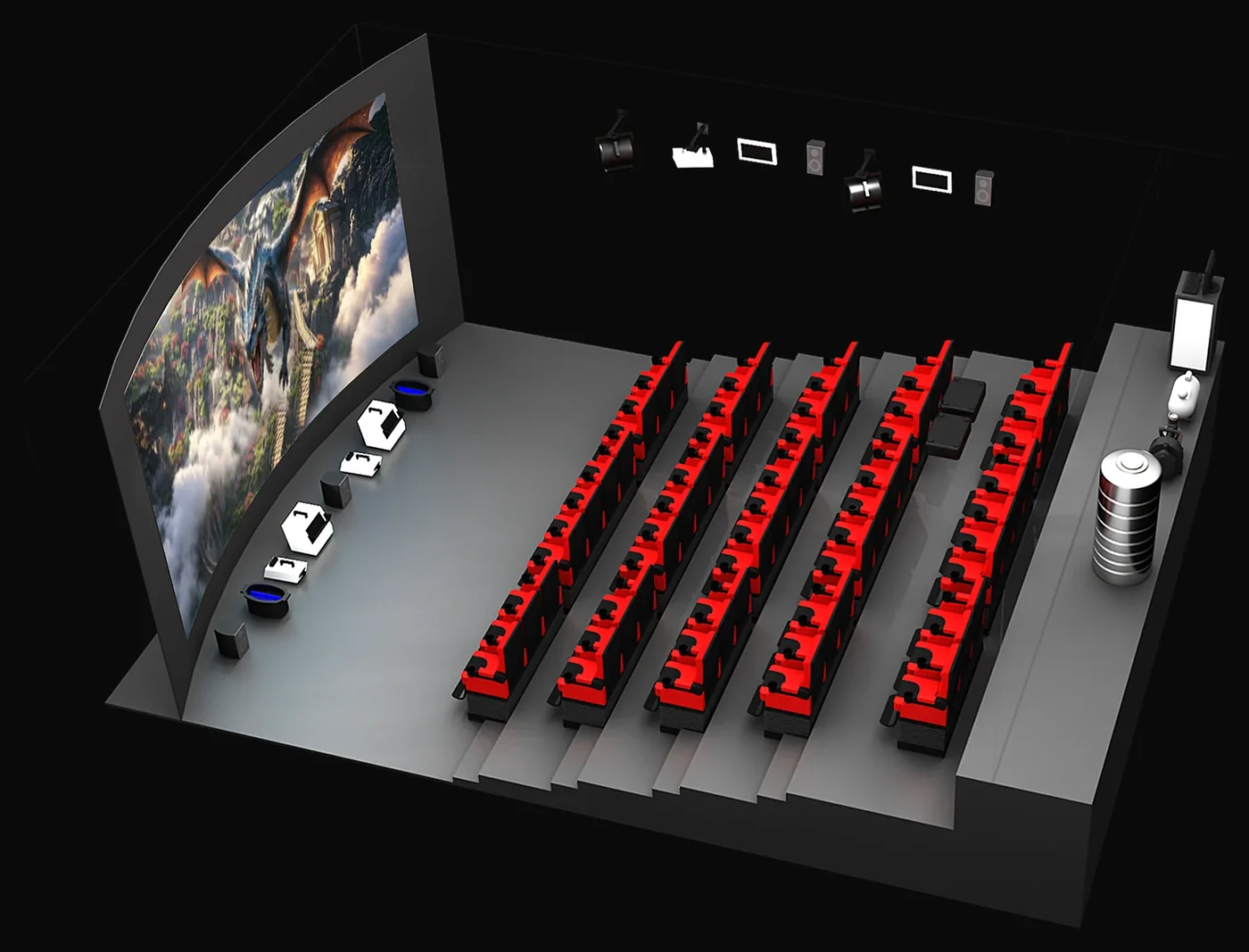
“Motion simulator for sale” covers two different products: home and racing rigs for one person, and commercial simulator rides that carry a group through a ride film. For an attraction, compare guests per show, the motion system (3-DOF or 6-DOF), the film library, power and after-sales. Waku builds two commercial simulators: the 5D flying theater with 10 to 60 seats on 3-DOF motion, and the Bermuda Adventure, a 6-DOF boat cabin for 15, 20 or 30 guests.
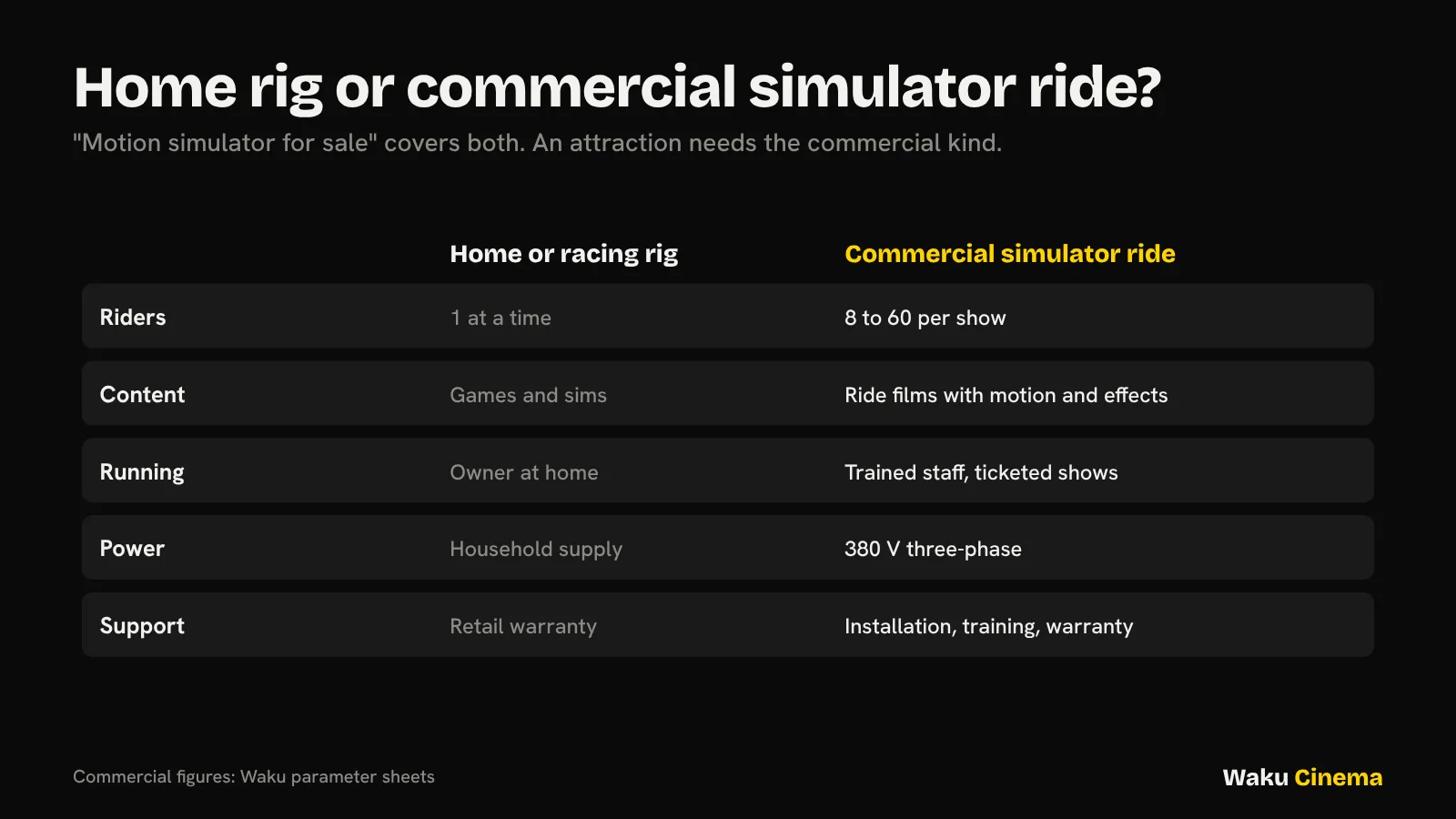
What is the difference between a home rig and a commercial simulator ride?
| Home or racing rig | Commercial simulator ride | |
|---|---|---|
| Riders | One at a time | 8 to 60 per show (Waku models) |
| Content | Games and simulation software | Ride films with programmed motion and effects |
| Operation | The owner | Trained staff, ticketed shows |
| Power | Household supply | 380 V three-phase |
| Support | Retail warranty | Installation, training, warranty, film updates |
Which commercial simulator fits your venue?
| Model | Seats per show | Motion | Minimum room | Power (by configuration) |
|---|---|---|---|---|
| 5D flying theater | 10, 16, 30 or 60 | 3-DOF motion seats in rows | 6 × 6 m, 3 m high | 380 V, about 10–45 kW |
| Bermuda Adventure | 15, 20 or 30 | 6-DOF platform under a boat cabin | Typically 6 × 5 m, 3.2 m high | 380 V, about 12, 16 or 28 kW |
A 6-DOF platform moves in all six directions, including sideways, up and down and forward and back, so it can reproduce waves and bumps; a 3-DOF seat pitches, rolls and heaves, which suits flight films. Our 3-DOF vs 6-DOF guide explains the difference in detail.
How many guests per hour can a simulator ride serve?
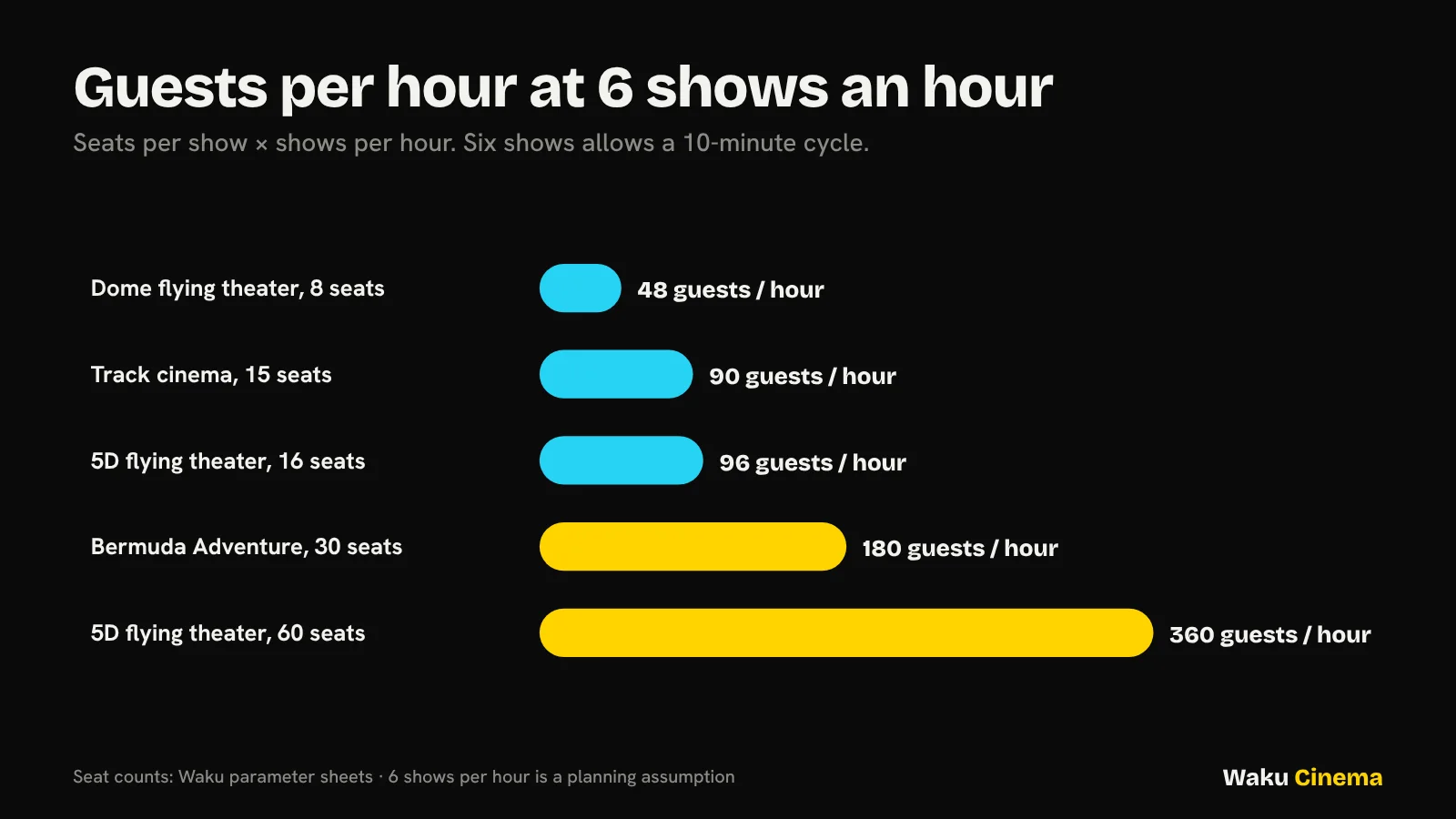
Guests per hour = seats per show × shows per hour. Most Waku ride films run 5 to 6 minutes; with 2 minutes to unload and board, 6 shows an hour is a safe planning figure. At 6 shows an hour, a 30-seat Bermuda Adventure serves 30 × 6 = 180 guests per hour, and a 60-seat 5D flying theater 60 × 6 = 360. Use the same figure in our revenue guide.
What should you check before buying a commercial simulator?
- Motion and payload: how many degrees of freedom, and the load per seat or cabin.
- Films: how many titles are included, whether updates are free, and whether custom films are possible. Waku makes its own films; the dome flying theater ships with 30.
- Room and power: floor area, clear height and the 380 V supply, checked against a layout drawing.
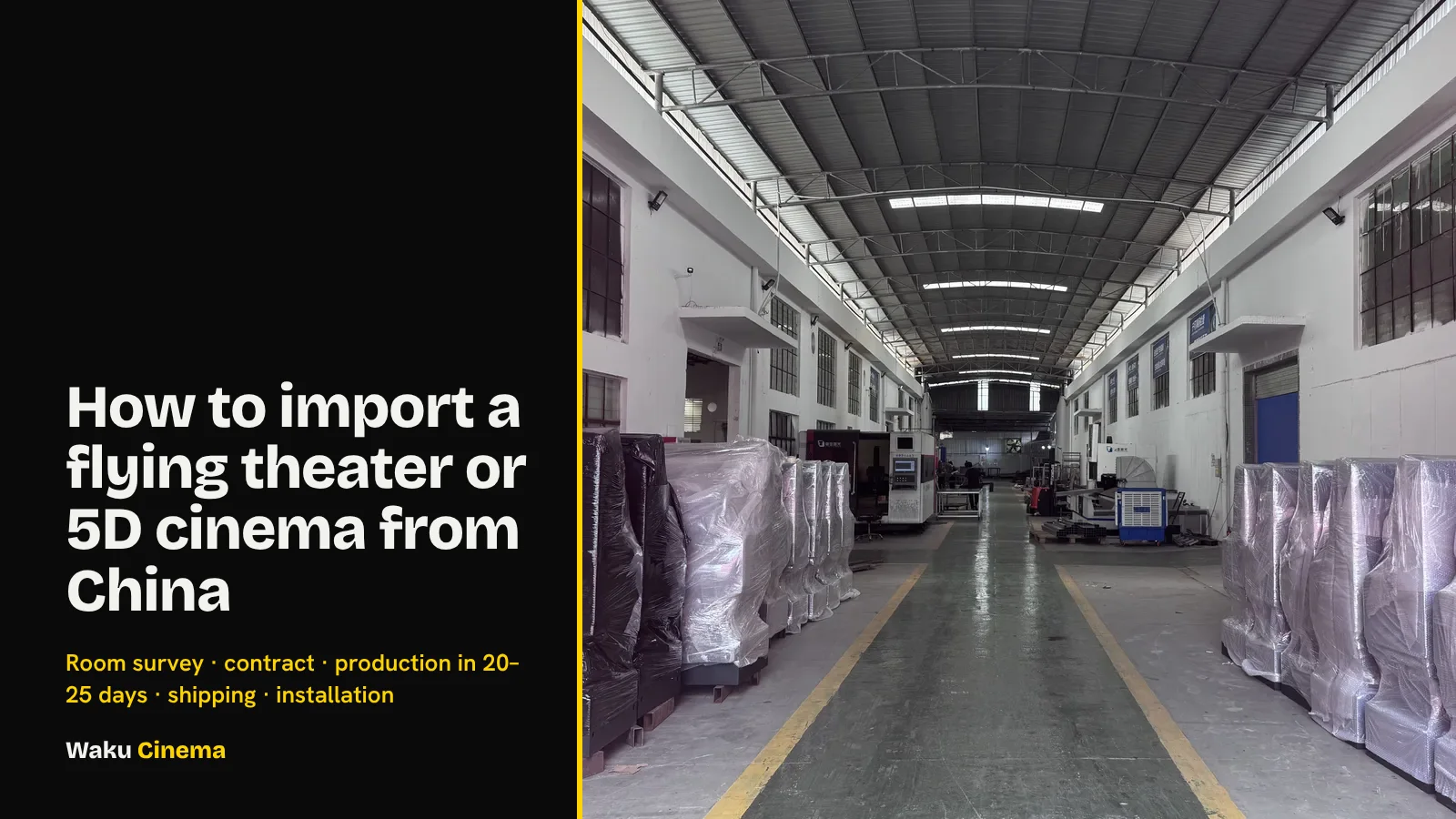
- Safety: restraints, the daily check procedure and the documents your inspector needs (see the safety section of our import guide).
- After-sales: installation, operator training and warranty. Waku theaters have a one-year warranty and no scheduled wear-part replacement.
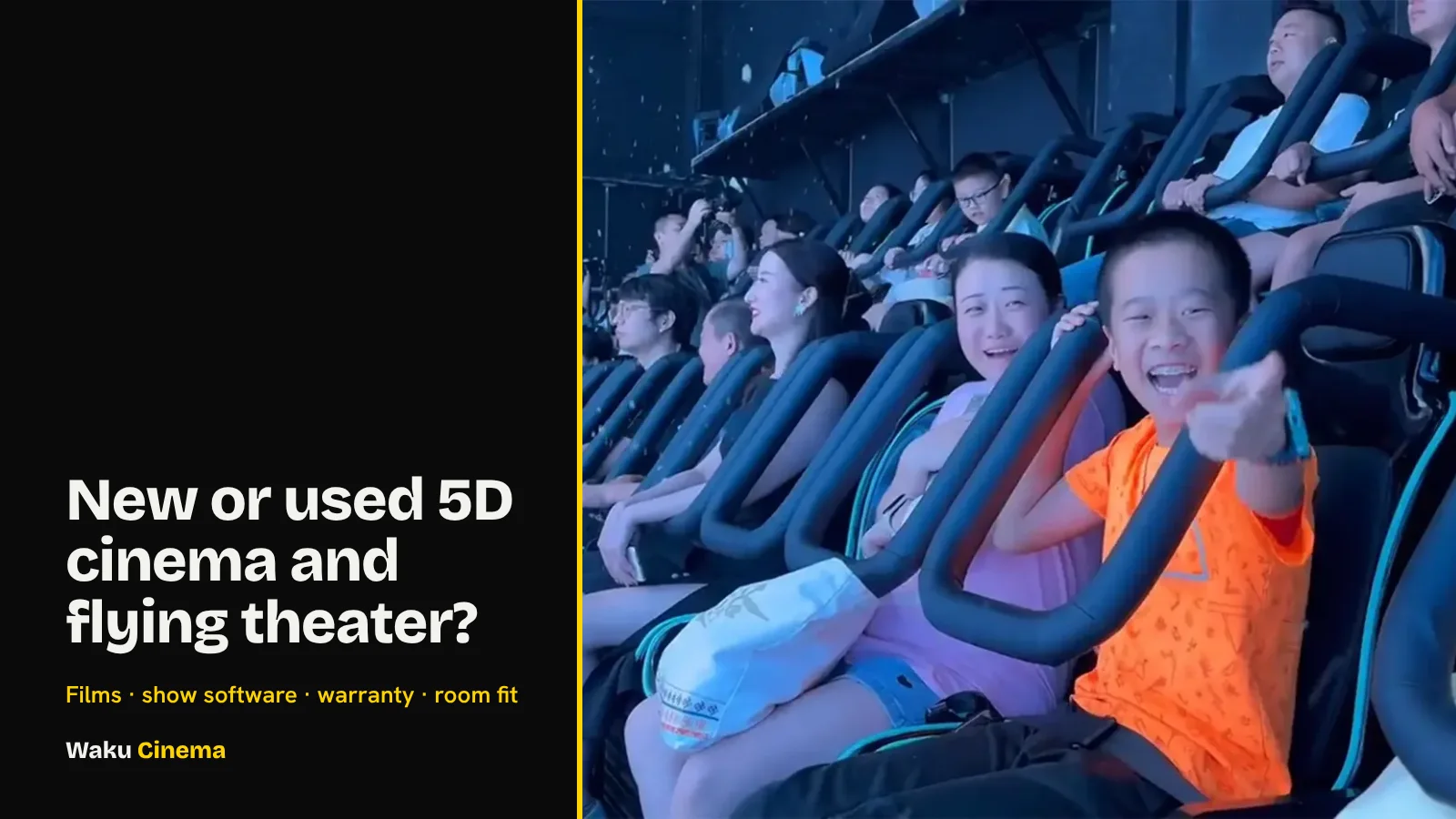
Thinking of a second-hand simulator? Read new or used 5D cinema and flying theater first: the film and software licences decide whether a used ride can run at all.
Frequently asked questions
How much space does a commercial motion simulator need?
The Waku 5D flying theater fits a room from 6 × 6 m with a 3 m ceiling; the Bermuda Adventure typically needs 6 × 5 m with 3.2 m.
Is a 6-DOF simulator better than 3-DOF?
Not always. 6-DOF adds sideways, vertical and forward-back movement, which suits boat and vehicle films; 3-DOF seats suit flight films and allow more seats per show.
How many guests can a simulator ride take per hour?
Seats per show × shows per hour. At 6 shows an hour, a 30-seat Bermuda Adventure serves about 180 guests per hour.
Can I buy a single-seat simulator from Waku?
Waku builds group rides: the 5D flying theater from 10 seats and the Bermuda Adventure from 15 seats.
Talk to the factory
Tell us your country, venue size and ceiling height. We reply with a recommendation and a quotation.