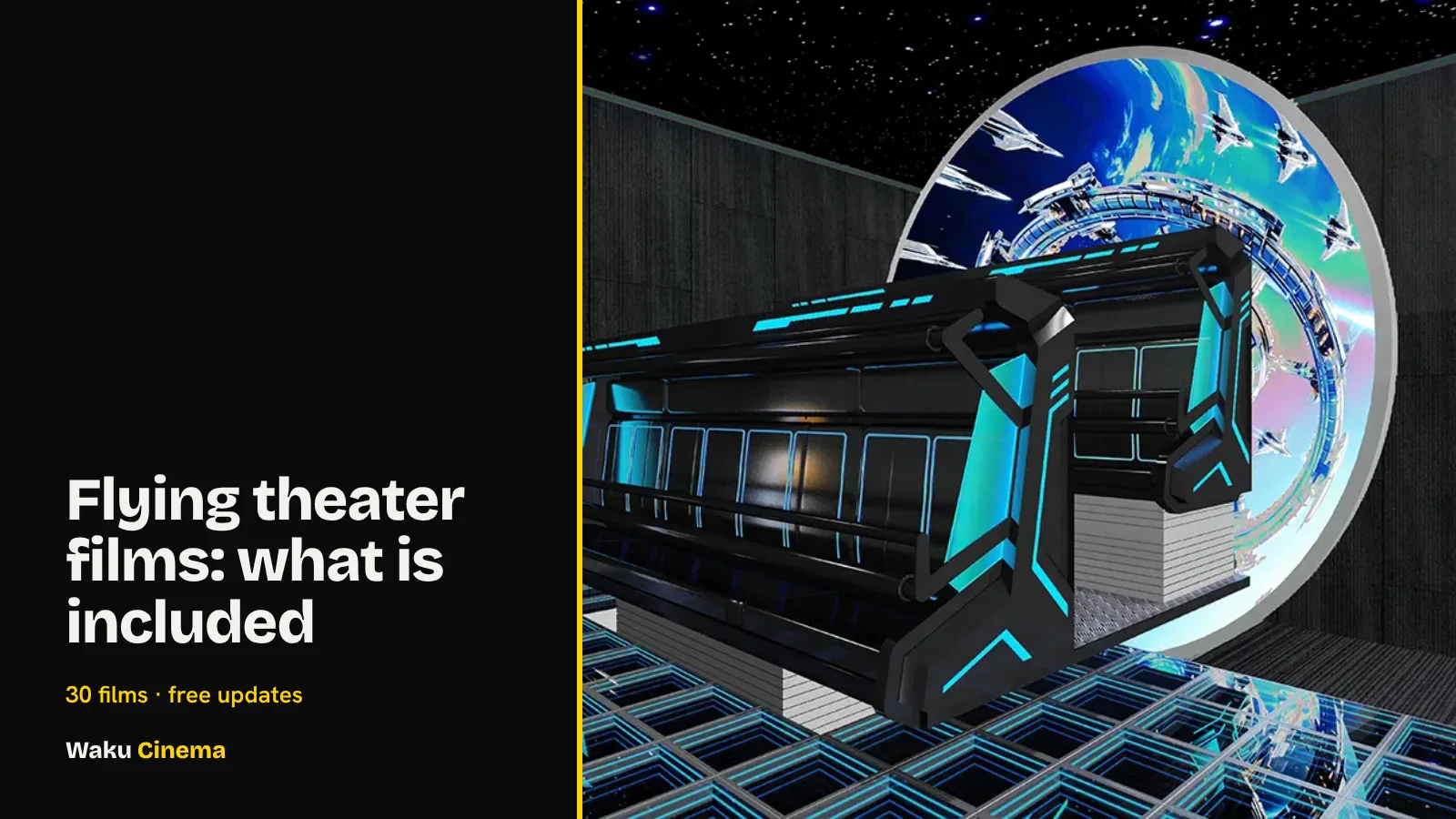
What Is a Flying Theater, and How Does the Ride Work?
A flying theater lifts guests on motion seats in front of a screen that fills their view, so the film feels like flight. How the ride works, the two main types and what each needs.
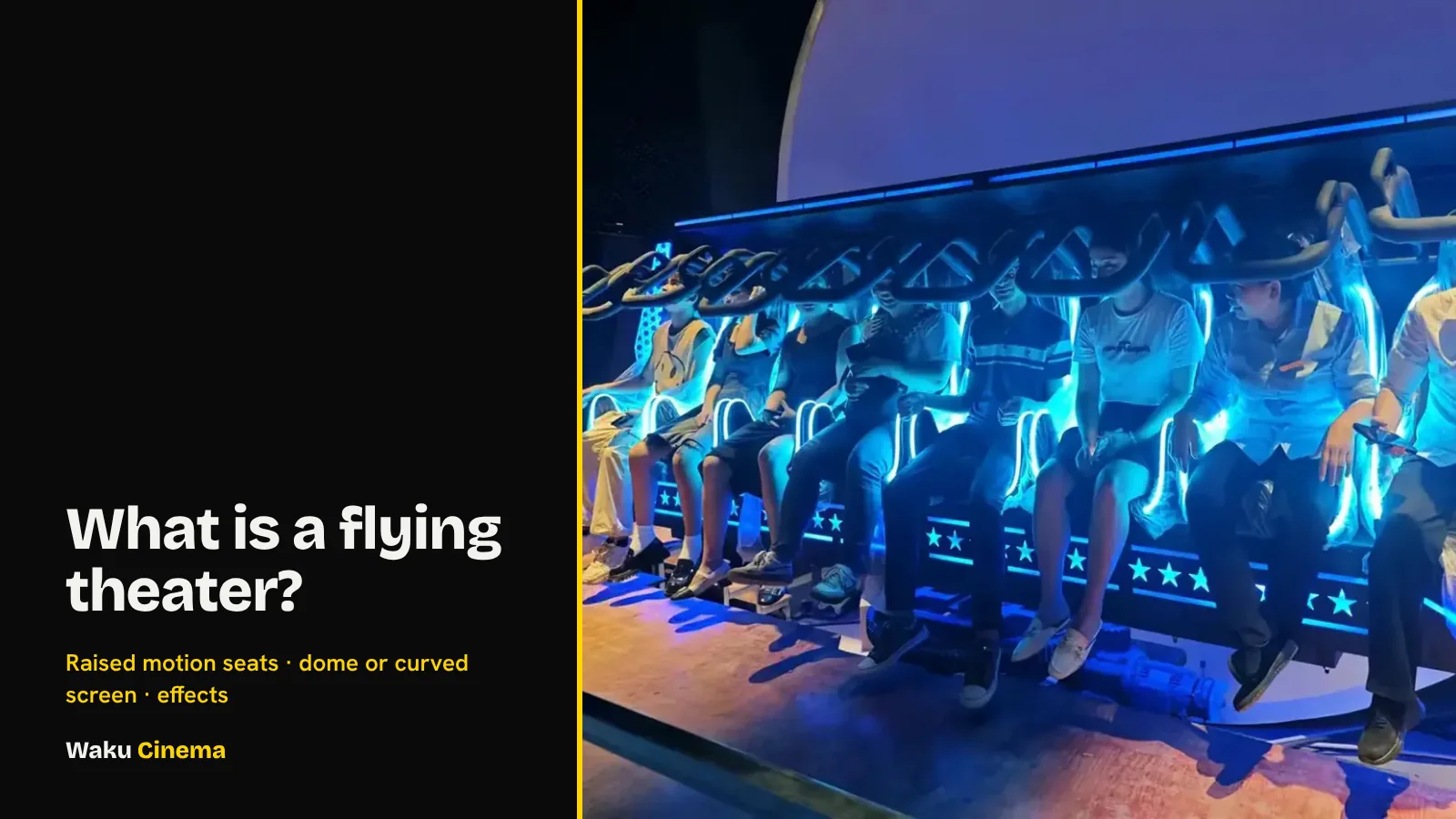
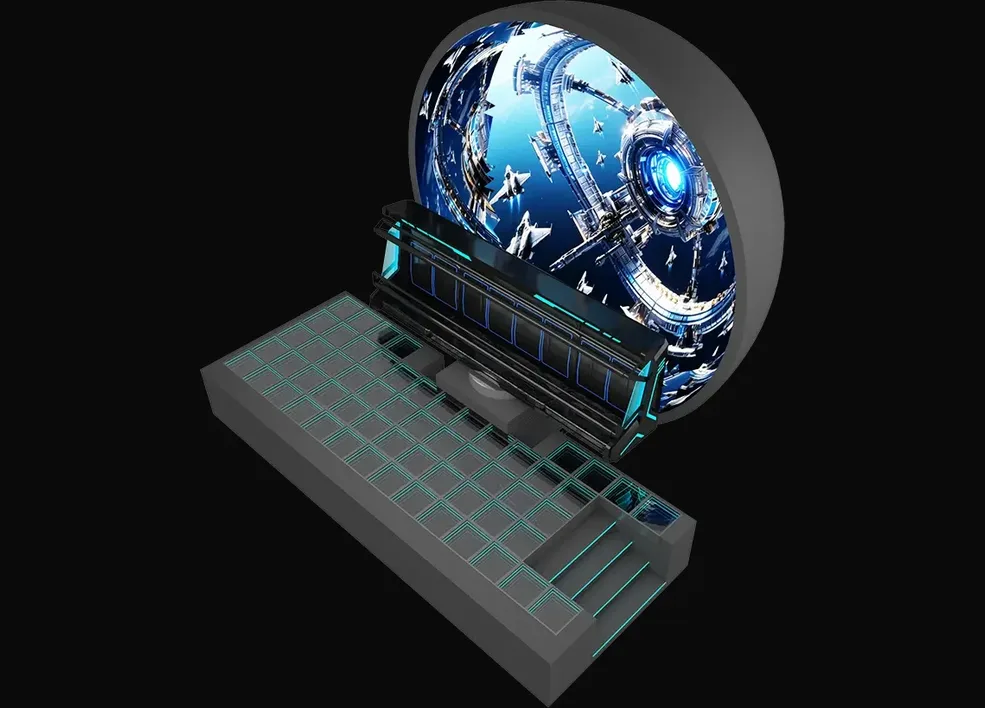
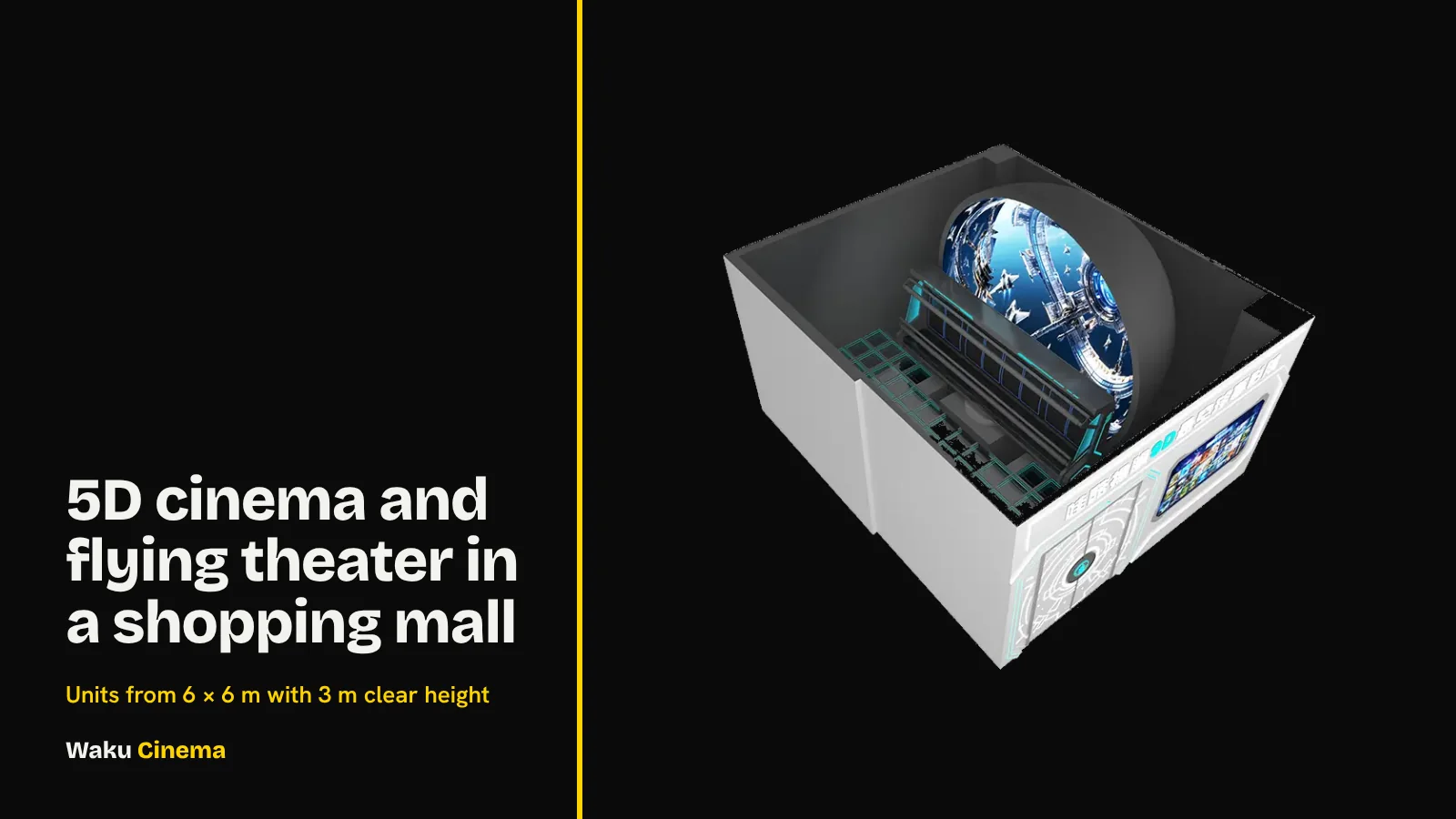
A flying theater (also written flying theatre, or called a flying cinema) is a simulator ride in which guests sit on raised motion seats in front of a dome or a large curved screen. The seats tilt and lift in step with an aerial film, guests’ feet leave the floor, and effects such as wind, rain and snow arrive on cue, so the film feels like flight rather than a view. Waku builds two versions: the dome flying theater with 8 to 32 seats in rooms from 6 × 6 × 3.8 m, and the 5D flying theater with 10 to 60 seats in rooms from 6 × 6 × 3 m.
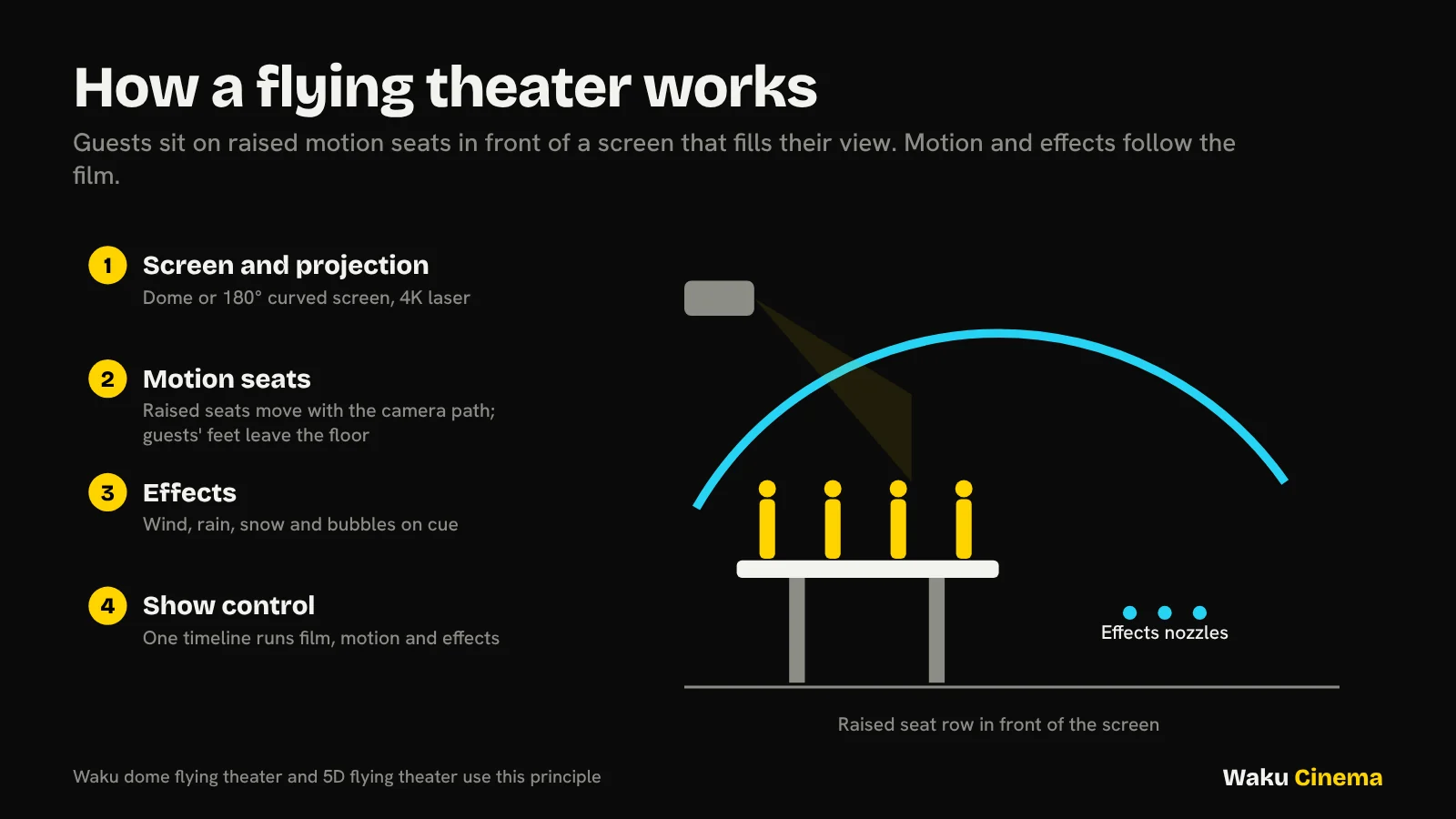
How does a flying theater create the feeling of flight?
Four parts work together. The screen is large enough to fill the guest’s field of view, so the edge of the image disappears. The motion seats follow the camera path of the film: when the camera dives, the seats pitch forward; when it banks, they roll. Because the seats are raised, guests’ legs hang free, which removes the feeling of sitting in a cinema. The effects system adds physical cues, and the show controller starts the film, the motion and the effects on one timeline so that they stay in step.
In Waku theaters the image is glasses-free 3D from 4K laser projectors (or an LED wall on the 5D flying theater). On the dome flying theater the whole show starts with one key from a tablet.
Where did the flying theater come from?
Disney introduced the format with Soarin’ Over California, which opened at Disney California Adventure in 2001. According to Wikipedia’s article on flying theaters, the success of that attraction started a worldwide trend, with more than 50 panoramic flying theaters built since 2013 by a range of specialist manufacturers. Theme parks still use the format for large attractions; smaller flying theaters now also run in malls, museums and scenic areas.
What types of flying theater are there?
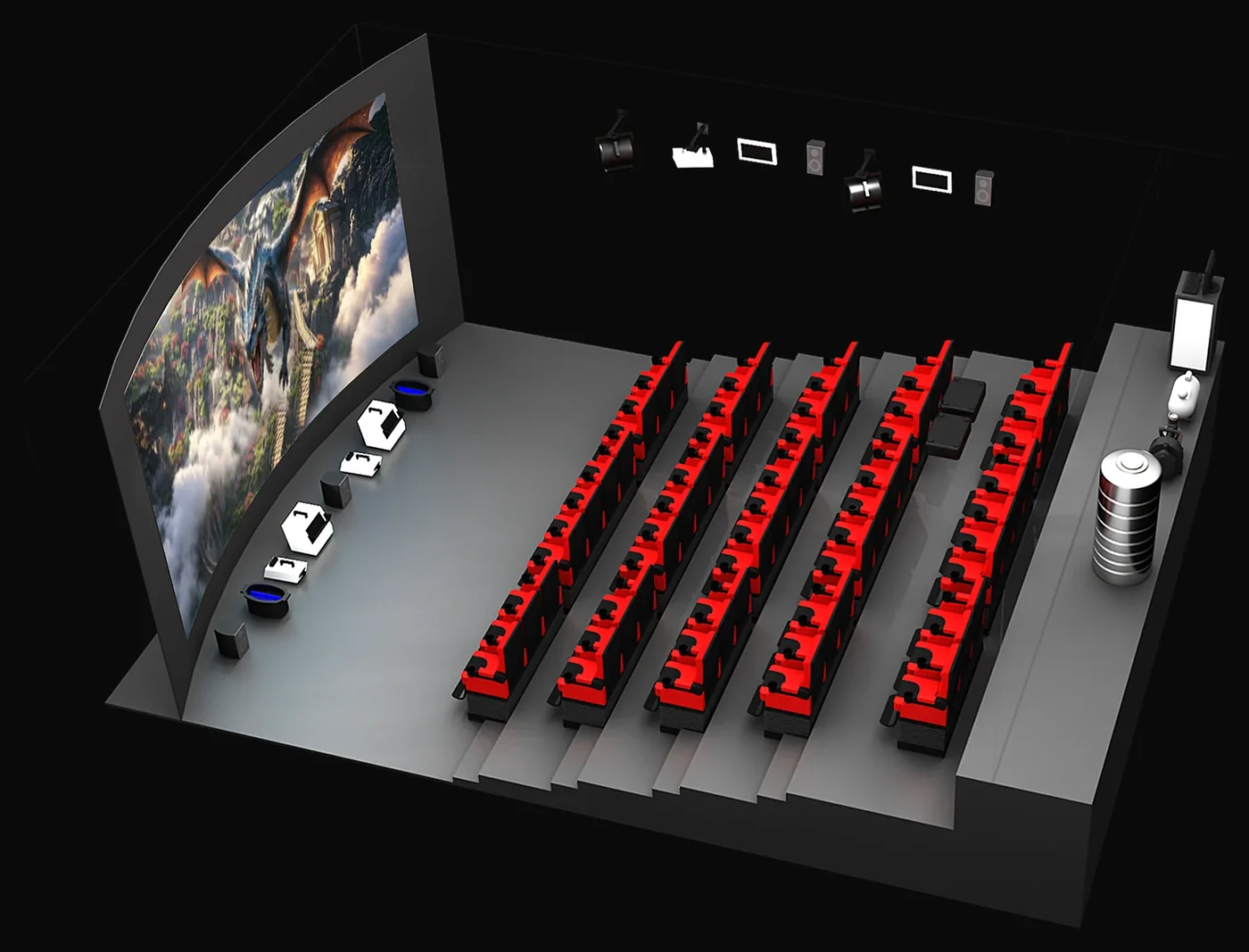
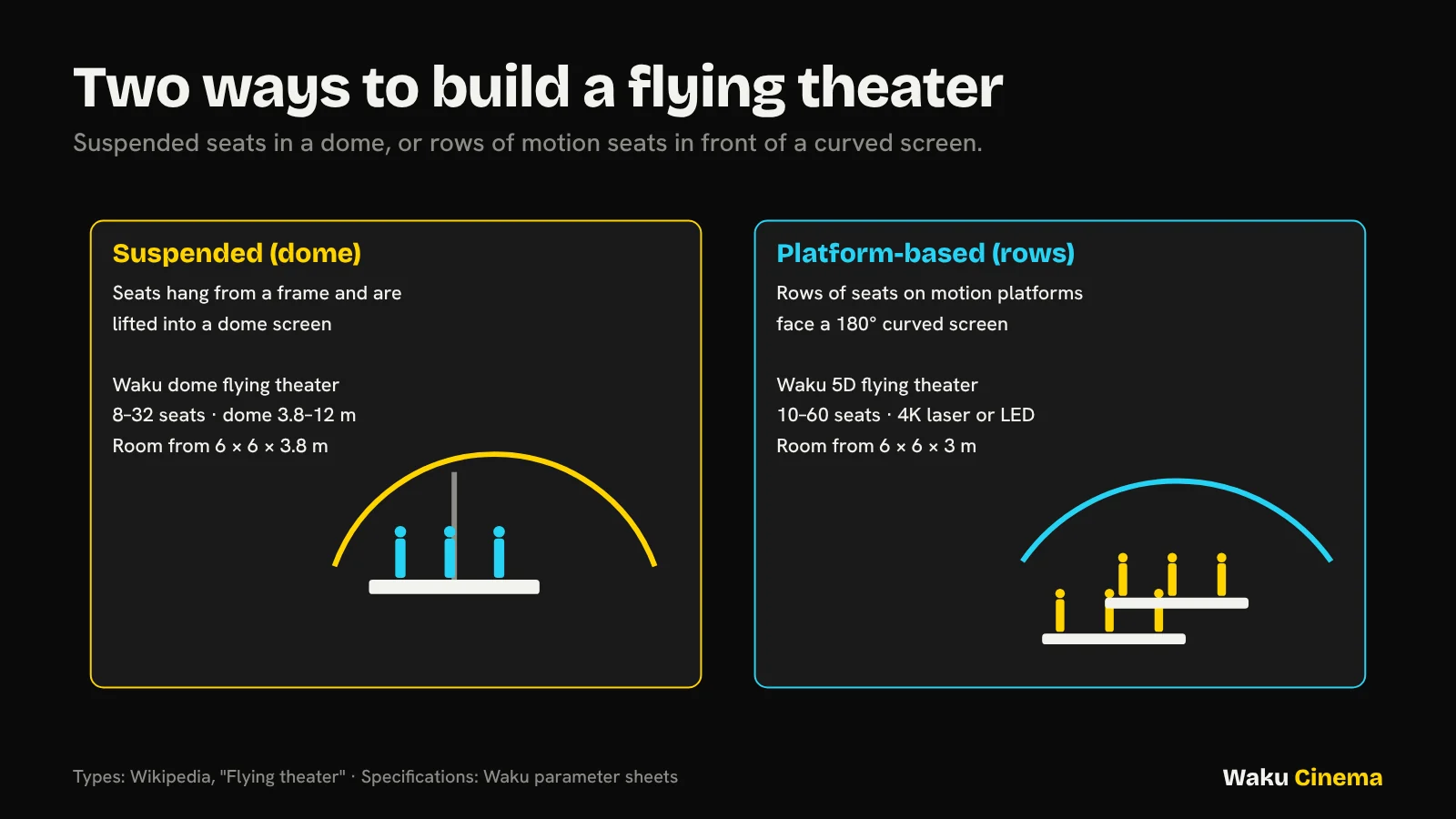
There are two main ways to build one. In a suspended flying theater, the seat row hangs from a frame and is lifted into a dome screen. In a platform-based flying theater, rows of seats on motion platforms face a large curved screen, which fits smaller buildings.
| Type | How the seats move | Screen | Seats per show | Minimum room (L × W × H) |
|---|---|---|---|---|
| Suspended: dome flying theater | Suspended seat row, lifted toward the dome centre | Dome, 3.8, 5, 6 or 12 m | 8, 16, 24 or 32 | 6 × 6 × 3.8 m |
| Platform-based: 5D flying theater | Rows on 3-DOF motion platforms | 180° curved, 4K laser or LED | 10, 16, 30 or 60 | 6 × 6 × 3 m |
The dome gives the stronger sense of flight because it fills the whole view; the platform-based version carries more guests per show and fits a lower ceiling. For the full four-model comparison, including the track cinema and the Bermuda Adventure, see which flying theater fits my venue.
Is a flying theater the same as a 5D, 7D or 9D cinema?
Often, yes. Suppliers sell the same kind of ride as a 5D cinema, a 7D or 9D flying cinema, or a flying theater ride. The D numbers are sales names, not standards: what matters is the screen, the seat motion and the effects. Our guide to 4D, 5D, 7D and 9D cinema shows how to compare offers that use different names.
How many guests does a flying theater carry per hour?
Guests per hour = seats per show × shows per hour. With a film of up to 10 minutes and 2 minutes to unload and board, the cycle is 12 minutes, which gives 5 shows an hour.
| Model | Smallest version | Largest version |
|---|---|---|
| Dome flying theater | 8 seats × 5 = 40 | 32 seats × 5 = 160 |
| 5D flying theater | 10 seats × 5 = 50 | 60 seats × 5 = 300 |
What does a venue need to install one?
Three things decide whether a flying theater fits: clear height, floor area and power. The 5D flying theater needs at least 3 m of clear height and a 6 × 6 m room for the 10-seat version; the dome flying theater needs 3.8 m and 6 × 6 m for the 3.8 m dome. Both run on 380 V, at about 10 to 45 kW for the 5D flying theater and about 20 to 60 kW for the dome, depending on the configuration. How to measure the room is covered in space and power requirements.
Which flying theater should I choose?
- Clear height under 3.8 m: the 5D flying theater, which fits from 3 m.
- Museum, science centre or a landscape film as the main draw: the dome flying theater, which fills the whole view.
- More than 32 guests per show: the 5D flying theater with 30 or 60 seats.
Send us your floor plan and clear height, and we will propose the model, the seat count and a layout drawing.
Frequently asked questions
What is a flying theatre?
The same ride as a flying theater; flying theatre is the British spelling. Guests sit on raised motion seats in front of a dome or curved screen and the seats move with an aerial film.
How high do the seats lift?
On the Waku dome flying theater the seat surface stays within 1.95 m of the base and moves at under 2 m/s.
Do guests need 3D glasses?
No. Waku flying theaters use glasses-free 3D images.
How long is one ride?
Most Waku ride films run 5 to 6 minutes; the library ranges from 3 min 48 s to 7 min 35 s. With boarding, that allows 6 to 10 shows per hour.
How much does a flying theater cost?
It depends on seat count, screen and motion system, plus films, shipping, installation and site works. Our cost guide explains each block; Waku quotes each project from your room and seat count.
Talk to the factory
Tell us your country, venue size and ceiling height. We reply with a recommendation and a quotation.