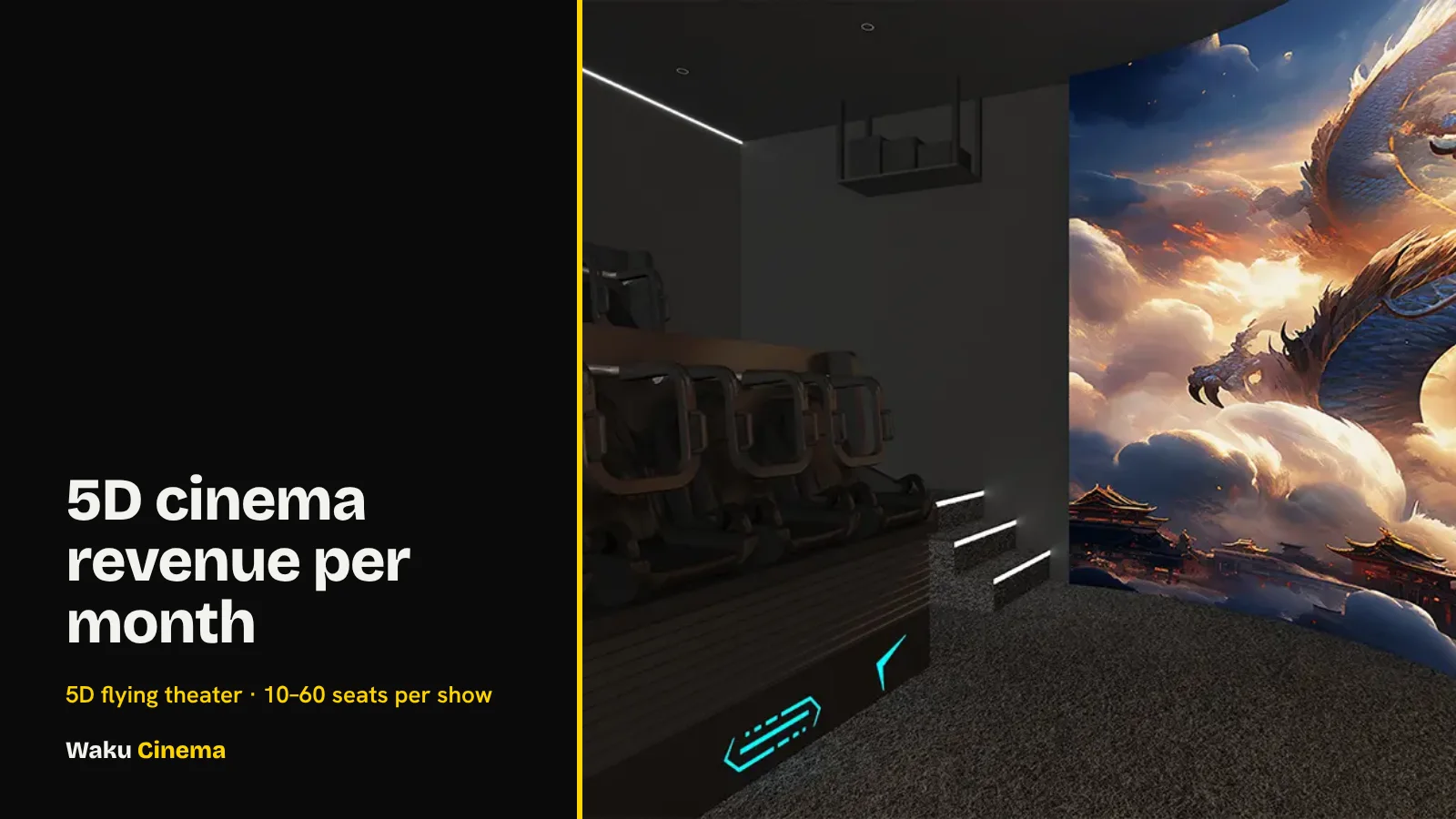
3-DOF or 6-DOF: Which Motion Platform Does My Motion Theater Need?
Degrees of freedom are the directions a platform can move. What 3-DOF and 6-DOF each reproduce, which films need which, and how Waku uses them in the 5D flying theater and the Bermuda Adventure.
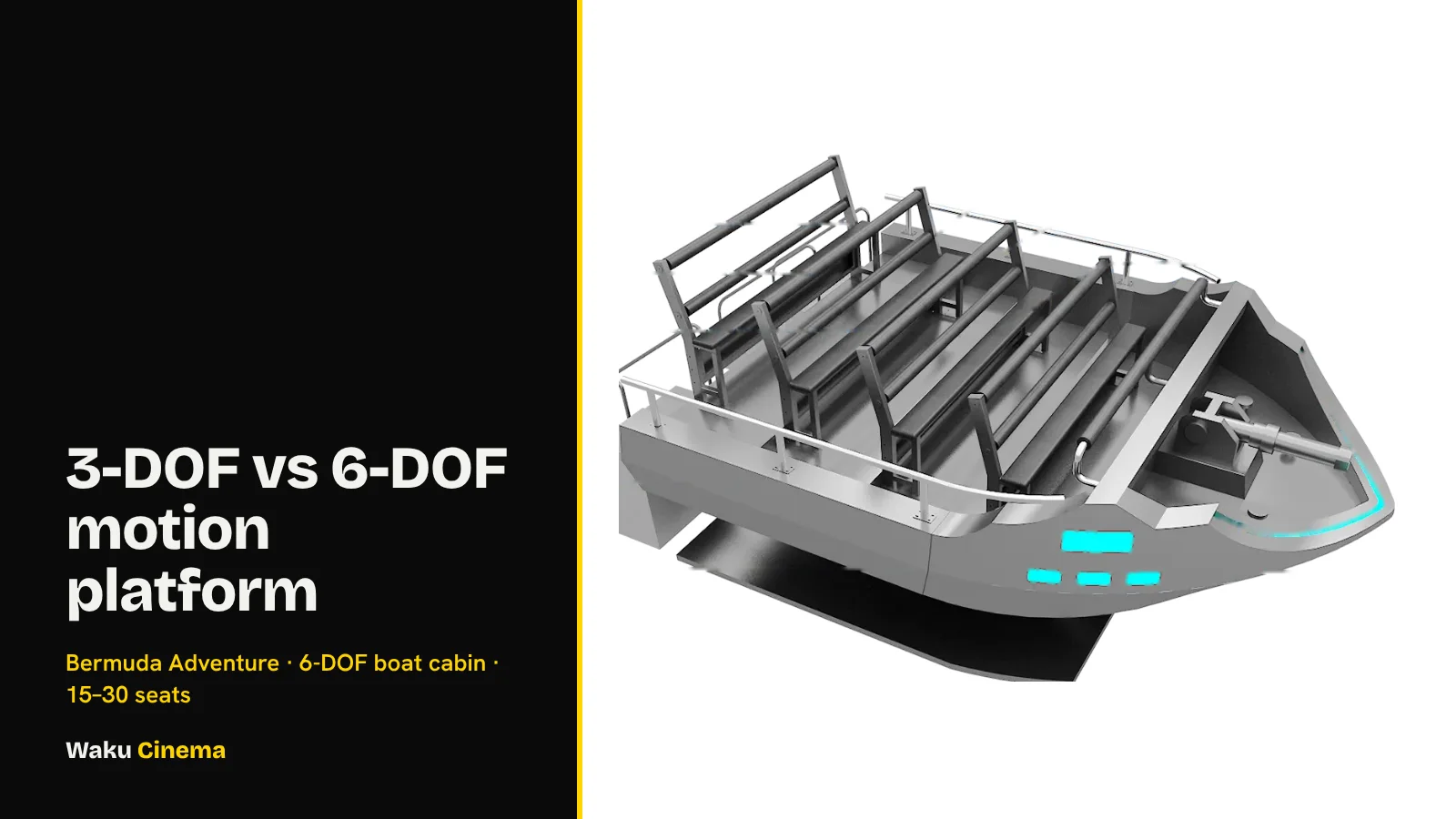
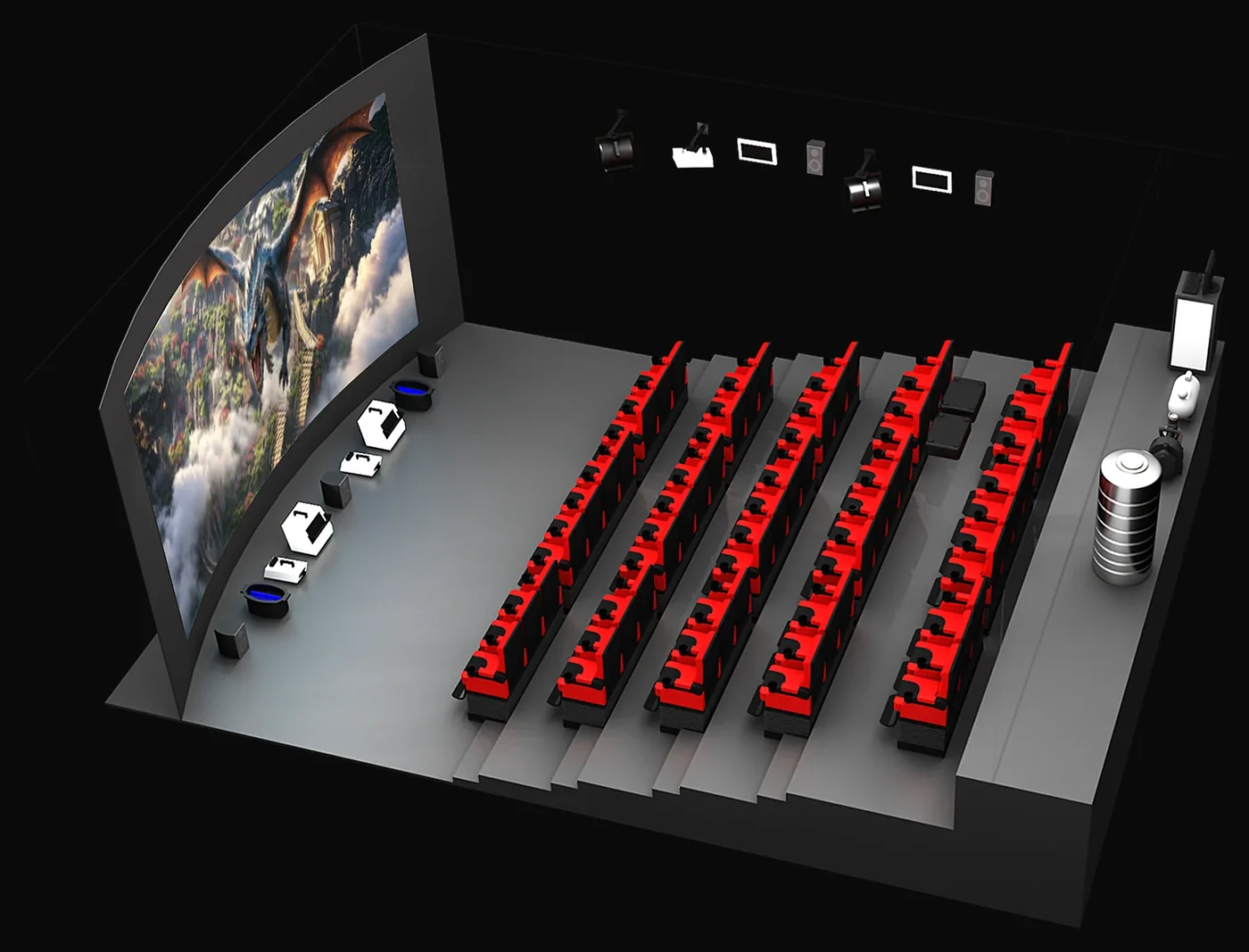
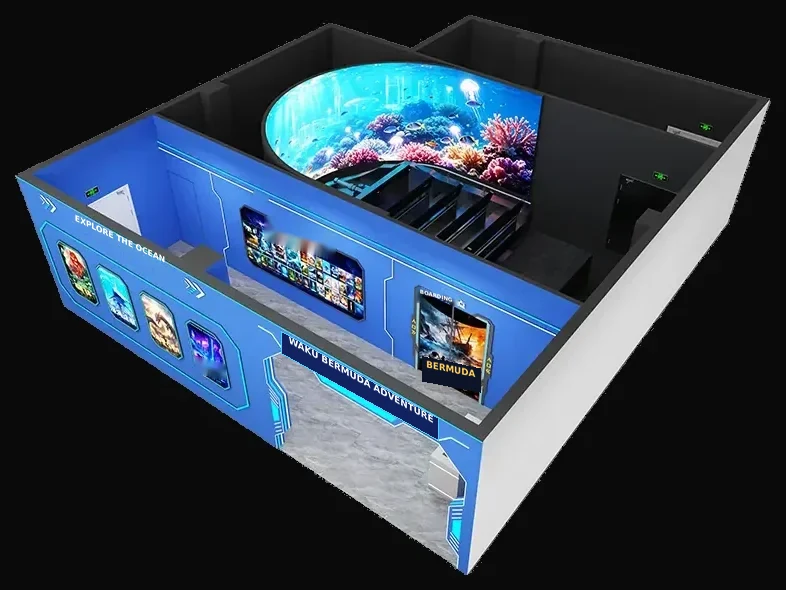
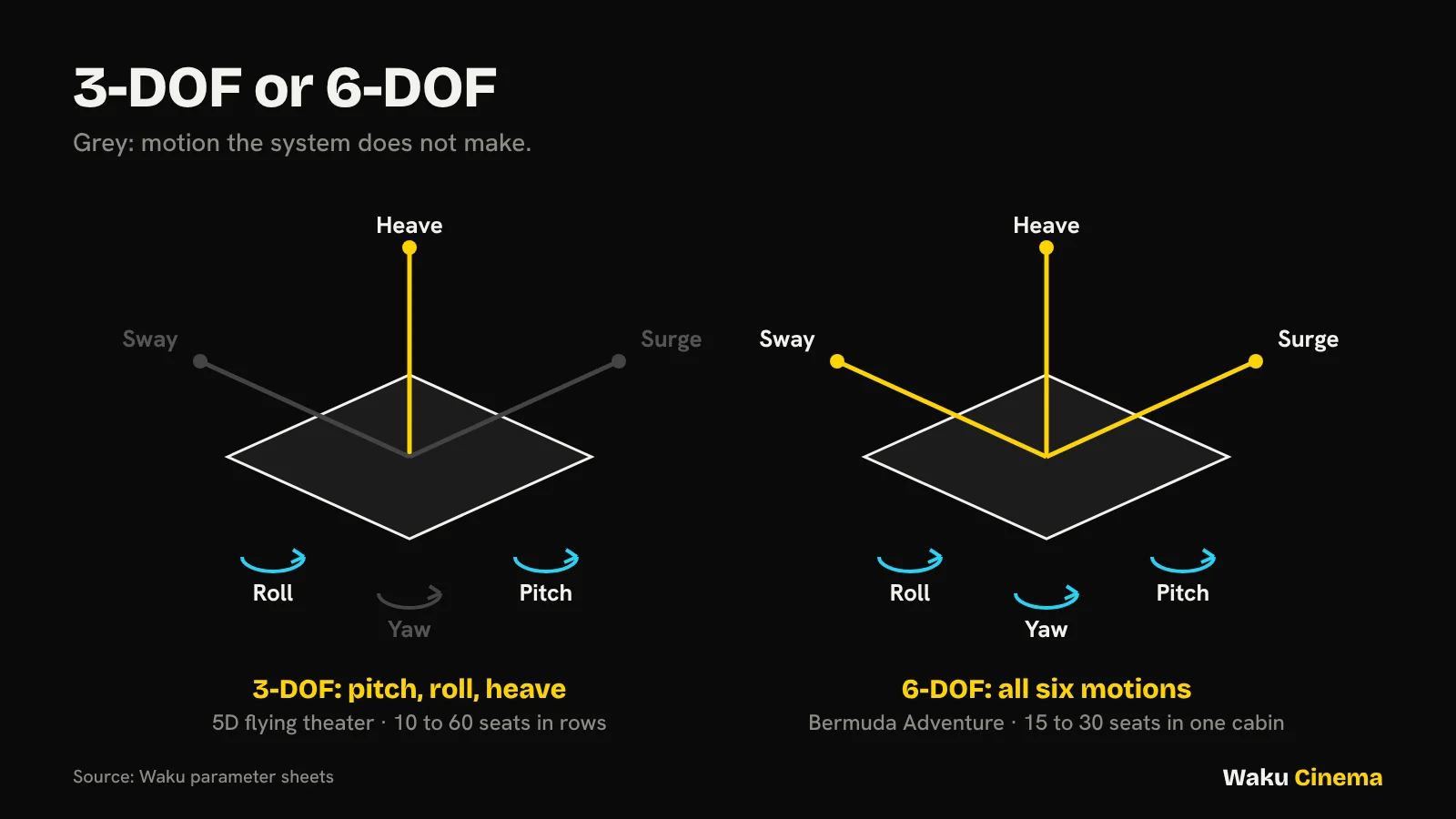
Choose 3-DOF motion when you want to move many guests in rows through flying films, and 6-DOF when the film needs sideways, forward and turning movement, as in a boat or vehicle ride. A 3-DOF system tilts forward and back (pitch), side to side (roll) and up and down (heave). A 6-DOF system adds surge (forward and back), sway (sideways) and yaw (turning). Waku uses 3-DOF motion seats in the 5D flying theater (10 to 60 seats) and a 6-DOF electric platform in the Bermuda Adventure (15 to 30 seats).
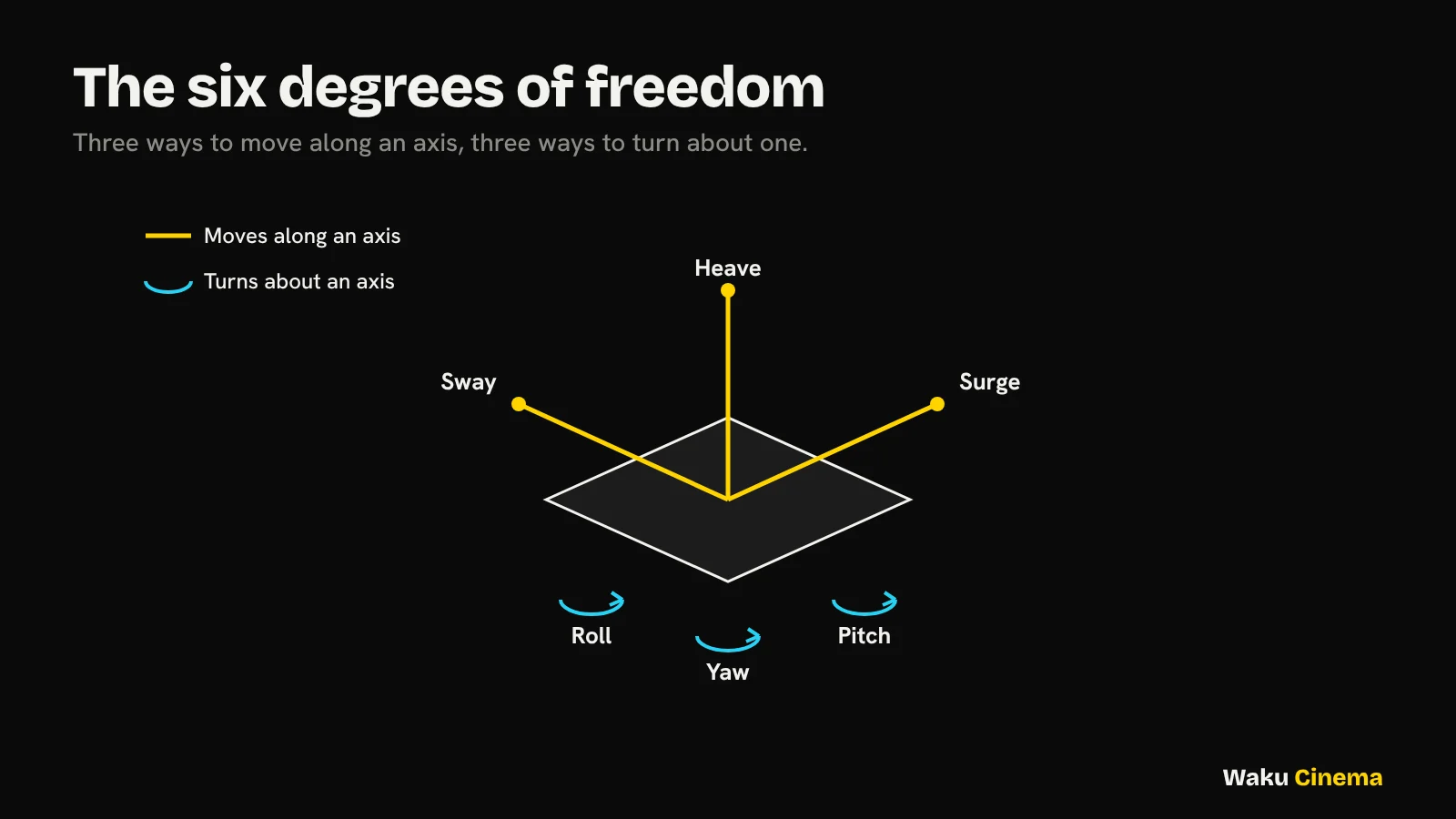
What are the six degrees of freedom?
| Motion | Direction | What guests feel | 3-DOF | 6-DOF |
|---|---|---|---|---|
| Pitch | Tilt nose up or down | Climbing, diving | Yes | Yes |
| Roll | Tilt left or right | Banking into a turn | Yes | Yes |
| Heave | Up and down | Bumps, drops, waves | Yes | Yes |
| Surge | Forward and back | Acceleration and braking | No | Yes |
| Sway | Side to side | Sliding sideways, a boat drifting | No | Yes |
| Yaw | Turn left or right | Spinning, steering | No | Yes |
When is 3-DOF enough?
For flying films. Flight is felt mostly as climbing, diving, banking and turbulence, which are pitch, roll and heave. Because each 3-DOF unit is simpler, it can be repeated along long seat rows, so a single room can carry a large group per show.
When do I need 6-DOF?
When the story moves the vehicle sideways or around a turn: a boat pushed by waves, a car sliding through a corner, a spaceship spinning. Surge, sway and yaw make these moments physical. A 6-DOF platform usually carries one shared cabin, so all guests feel the same movement together.
What moves a motion platform?
Electric actuators. Each actuator is a motor-driven linear unit; a 3-DOF platform uses three of them under a seat or seat row, and a 6-DOF platform, also called a Stewart platform, uses six arranged in pairs. The control system reads the motion file of the film and drives every actuator in step, so the platform pitches, rolls and heaves with the image. In a motion-seat theater, the same principle runs under each row of seats instead of a single cabin.
Which Waku model uses which system?
| Model | Motion system | Seats per show | Films | Minimum room |
|---|---|---|---|---|
| 5D flying theater | 3-DOF motion seats in rows | 10 / 16 / 30 / 60 | Flying and landscape films, 5–10 min | 6 × 6 × 3 m |
| Bermuda Adventure | 6-DOF electric platform, one cabin | 15 / 20 / 30 | Ocean and adventure films, 5–8 min | 6 × 5 × 3.2 m (typical) |
What sets the price of a 6-DOF motion platform, and which one is best?
There is no single best platform; the right one matches the load and the film. Five things set the price: the payload (seats, guests and cabin), the stroke and speed the films need, electric or hydraulic actuators, the controller and safety system, and whether the platform is sold alone or as a complete ride with screen, films and effects.
- Payload: a 30-guest cabin needs larger actuators than a 2-seat simulator.
- Stroke and speed: bigger, faster movements need longer, stronger actuators.
- Drive: electric actuators are quieter, cleaner and easier to maintain than hydraulics, which suits indoor attractions.
- Scope: a bare platform needs your own films and motion programming; a complete ride arrives ready to run.
Waku does not sell bare platforms: the Bermuda Adventure is quoted as a complete 6-DOF ride. Send your seat count and room size for a quotation.
How do I decide for my venue?
- Largest groups per show, lowest ceiling: 3-DOF seats in the 5D flying theater, up to 60 seats from a 3 m ceiling.
- A vehicle-style story with strong sideways and turning motion: the 6-DOF Bermuda Adventure, for guests aged 6 to 60.
- Both in one venue: the two models fit rooms of similar height (3 m and 3.2 m), so a site can run one of each with different films.
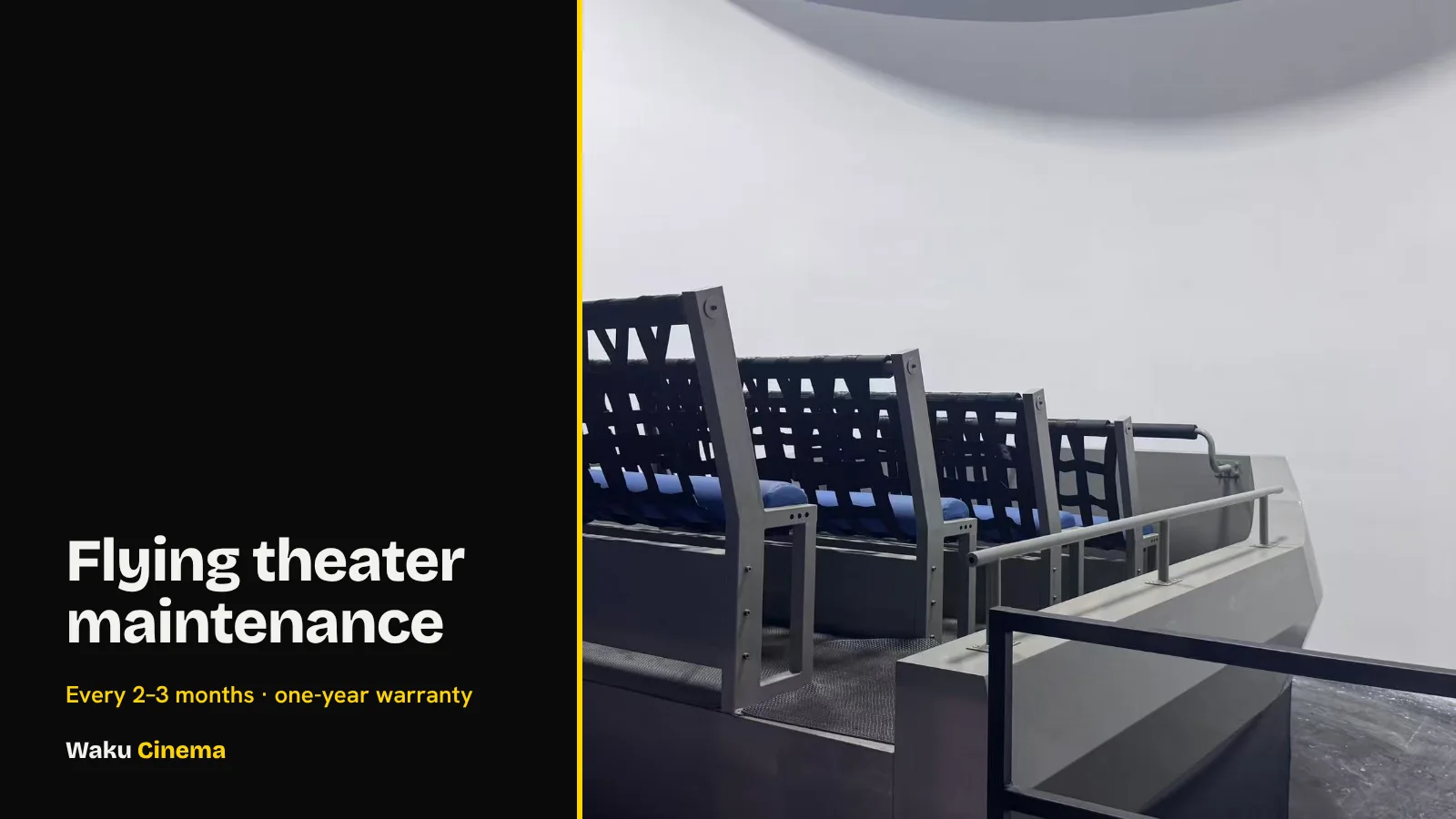
Both systems follow the same maintenance routine: grease the joints and re-tighten the bolts every 2 to 3 months (see flying theater maintenance). Ask us which system fits your site.
For the history and main types of simulator rides, see what a motion simulator ride is.
Buying a simulator for an attraction rather than a home rig? See what to look for in a commercial motion simulator.
Frequently asked questions
What does DOF mean on a motion platform?
Degrees of freedom: the number of independent directions the platform can move. 3-DOF covers pitch, roll and heave; 6-DOF adds surge, sway and yaw.
Is 6-DOF always better than 3-DOF?
No. 3-DOF reproduces flight well and suits large seat rows; 6-DOF is for films that need sideways, forward and turning motion.
What is a motion simulator platform?
A base driven by actuators that moves a seat, a seat row or a cabin in step with a film. 3-DOF platforms pitch, roll and heave; 6-DOF platforms add surge, sway and yaw.
Are motion seats in a movie theater the same thing?
Yes. Motion seats are seats mounted on a small motion platform, usually 3-DOF, programmed to the film.
Which Waku theater uses 6-DOF?
The Bermuda Adventure, on a 6-DOF electric motion platform for 15 to 30 guests.
Which Waku theater uses 3-DOF?
The 5D flying theater, with rows of 3-DOF motion seats for 10 to 60 guests.
Talk to the factory
Tell us your country, venue size and ceiling height. We reply with a recommendation and a quotation.