Should You Use a China Sourcing Agent to Buy a Flying Theater?
How China sourcing agents are paid, what they do well, where they add risk for an engineered attraction, and how to use one, or a third-party inspector, without losing direct contact with the factory.
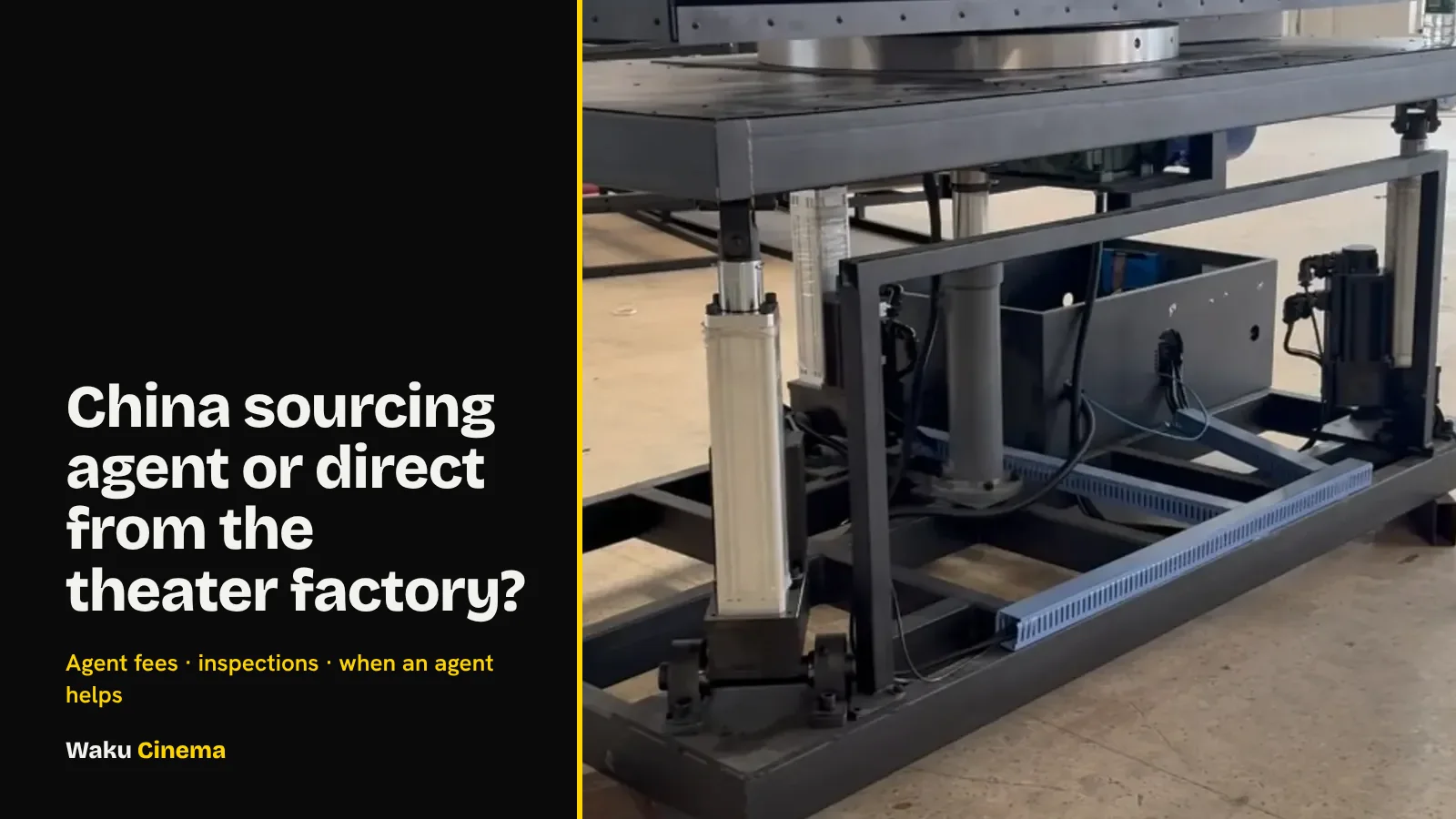
A China sourcing agent helps when you buy many small products from many factories. For a flying theater or 5D cinema, buying directly from the manufacturer is usually better: the theater is engineered to your room, runs on the maker’s own films and show-control software, and is installed by the factory’s engineers, so the layout, the technical answers and the warranty all come from the factory. If you do use an agent, find out how they are paid, keep direct contact with the factory’s engineers, and have the theater tested in the factory before it ships.
What does a China sourcing agent do?
A sourcing agent finds suppliers, compares quotations, negotiates, follows production, arranges quality inspections and coordinates shipping, usually from an office near the factories. Guides from the B2B platform Global Sources describe three types:
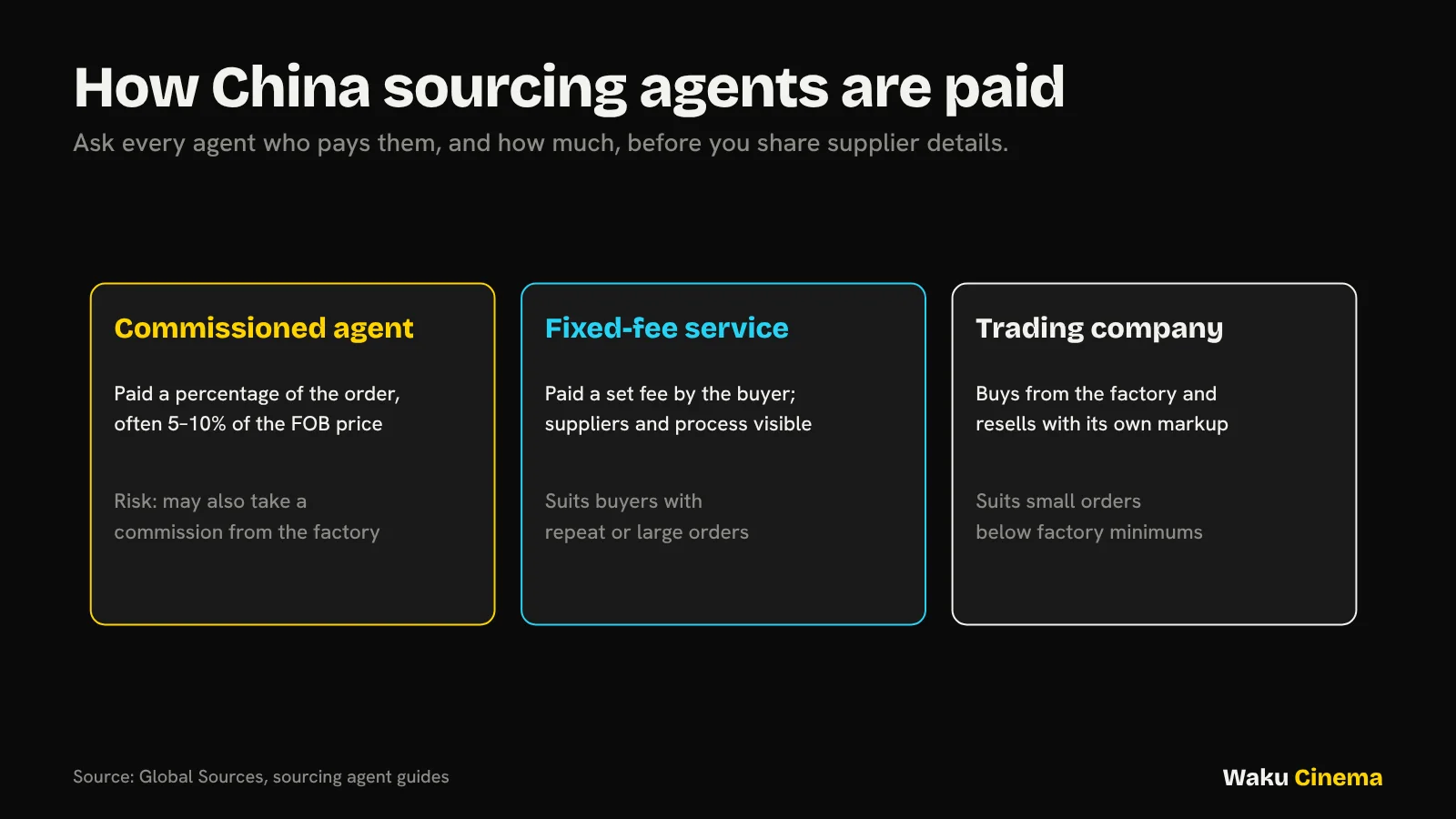
| Type | How they are paid | Watch for |
|---|---|---|
| Commissioned agent | A percentage of the order, usually 5 to 10% of the FOB price | Some also take a commission from the factory, which can put them on the factory’s side in a dispute |
| Fixed-fee service company | A set fee paid by the buyer; suppliers and process are visible | Upfront cost before production starts |
| Trading company | Buys from the factory and resells with its own markup | You may not know which factory builds your order |
Is an agent useful for a flying theater or 5D cinema?
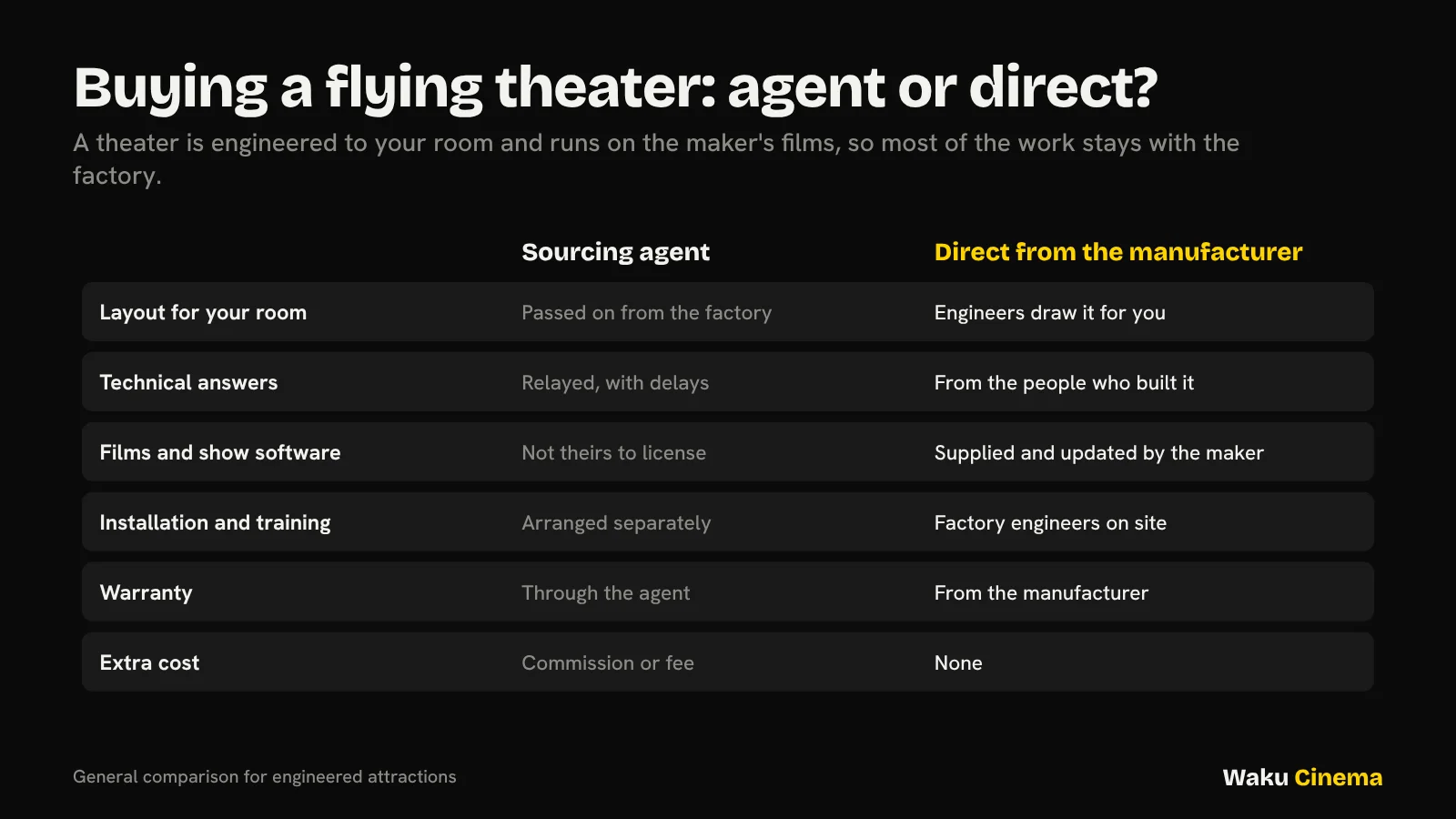
| Through a sourcing agent | Direct from the manufacturer | |
|---|---|---|
| Layout for your room | Passed on from the factory | Drawn by the factory’s engineers for your room |
| Technical questions | Relayed, with delays | Answered by the people who built it |
| Films and show software | Not the agent’s to license | Supplied and updated by the maker |
| Installation and training | Arranged separately | Factory engineers on site |
| Warranty | Through the agent | From the manufacturer |
| Extra cost | Commission or fee | None |
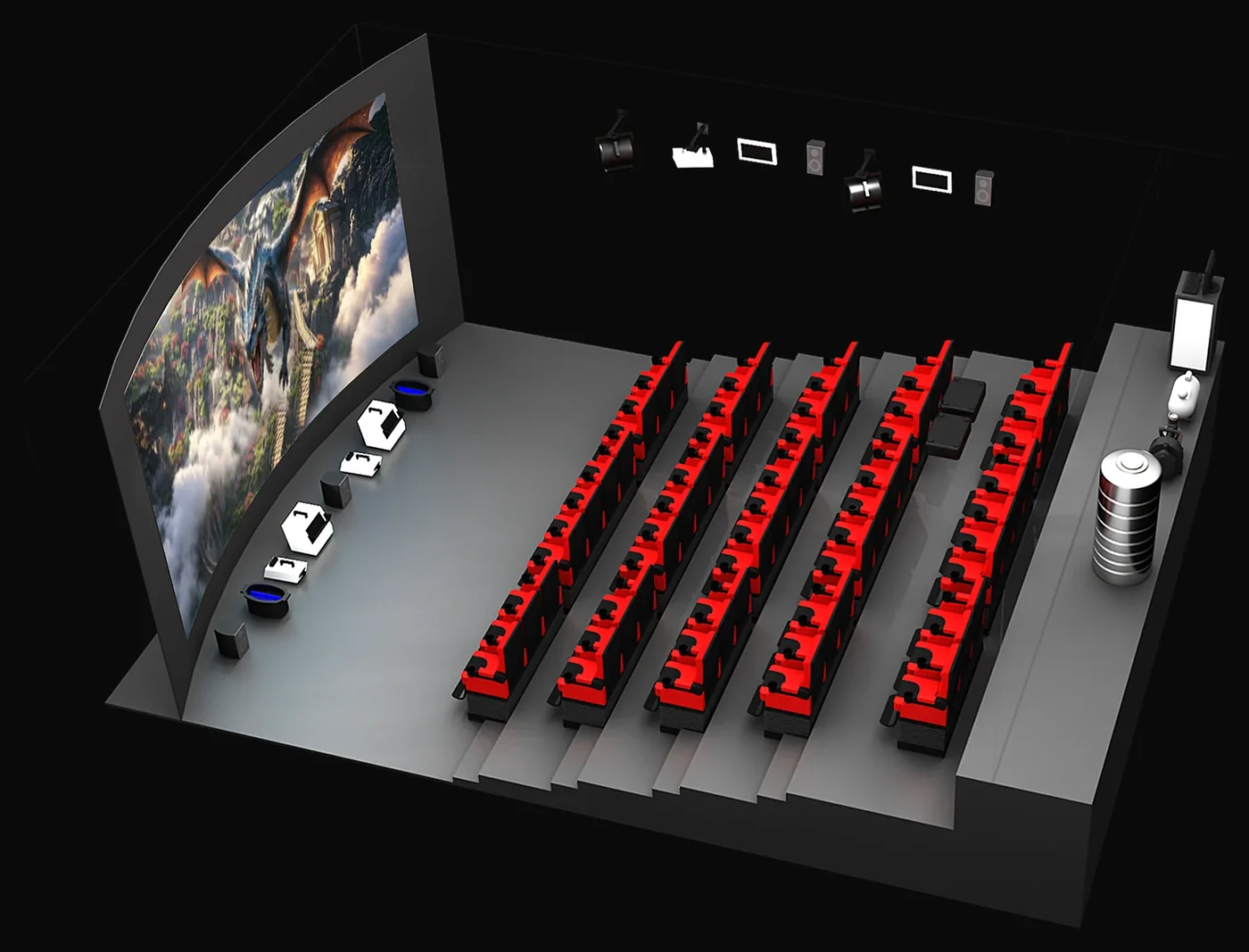
The reason is the product. A theater is not picked from a catalogue: the seat count, screen size and room layout are worked out for your venue, and the films and motion programmes come from the maker. Every question about clear height, power or the film list ends up with the factory anyway, and installation is done by the factory’s engineers.
When does an agent or inspector still help?
- Language and time zone: if no one on your team can follow up in English or Chinese during Chinese working hours.
- A mixed order: if you are also buying arcade machines, seating, lighting or theming from several other suppliers and want one shipment.
- Independent inspection: third-party inspection companies check production on your behalf. Common services are an initial production check, a during-production check, a pre-shipment inspection and a container loading check. For a theater, ask the inspector to watch a full test run with a film, motion and effects before packing.
How do you use an agent without losing control?
- Ask in writing how the agent is paid and whether they receive anything from the factory.
- Get the manufacturer’s name and address, and visit or video-tour that factory yourself.
- Sign the purchase contract with the manufacturer, or make sure the agent’s contract names it.
- Keep the factory’s engineers in the layout and technical discussions.
- Pay only to a company account in the same name as the contract.
- Have the warranty, film list and training written in the contract, by the party who will deliver them.
Waku sells direct and works with buyers’ agents and inspectors when the buyer wants them: we share the layout and specification, and inspectors are welcome at the factory test before packing. For the full buying process, see how to import a flying theater from China; to check any supplier, use our ten questions.
Frequently asked questions
How much does a China sourcing agent charge?
Commissioned agents usually charge a percentage of the order; Global Sources reports 5 to 10% of the FOB price. Fixed-fee services charge a set fee, and trading companies add their own markup.
Do I need a sourcing agent to buy a 5D cinema from China?
Usually not. A theater is engineered to your room and installed by the factory, so the layout, films and warranty come from the manufacturer. An agent can help with language, a mixed order or inspections.
What inspections can be done before shipment?
Third-party inspectors offer initial production checks, during-production checks, pre-shipment inspections and container loading checks. For a theater, ask them to watch a full test run with a film, motion and effects.
Can my agent or inspector visit the Waku factory?
Yes. We share the layout and specification with your agent and welcome inspectors at the factory test before packing.
Talk to the factory
Tell us your country, venue size and ceiling height. We reply with a recommendation and a quotation.