How Much Does a Flying Theater or 5D Cinema Cost?
The equipment quotation is one of six cost blocks. What each block covers, which options set the equipment price, what it costs to run, and how to judge a quotation against ticket revenue.
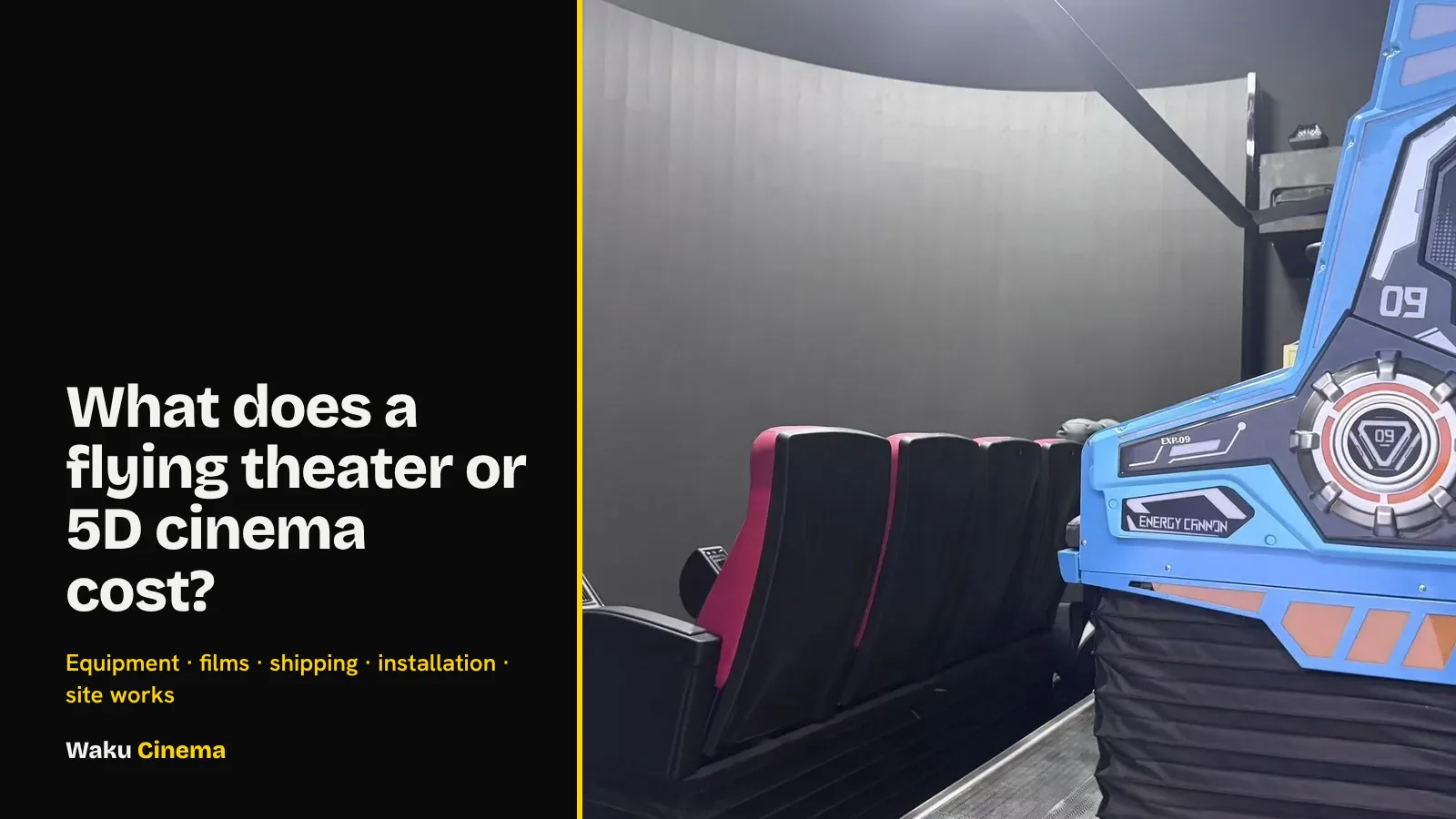
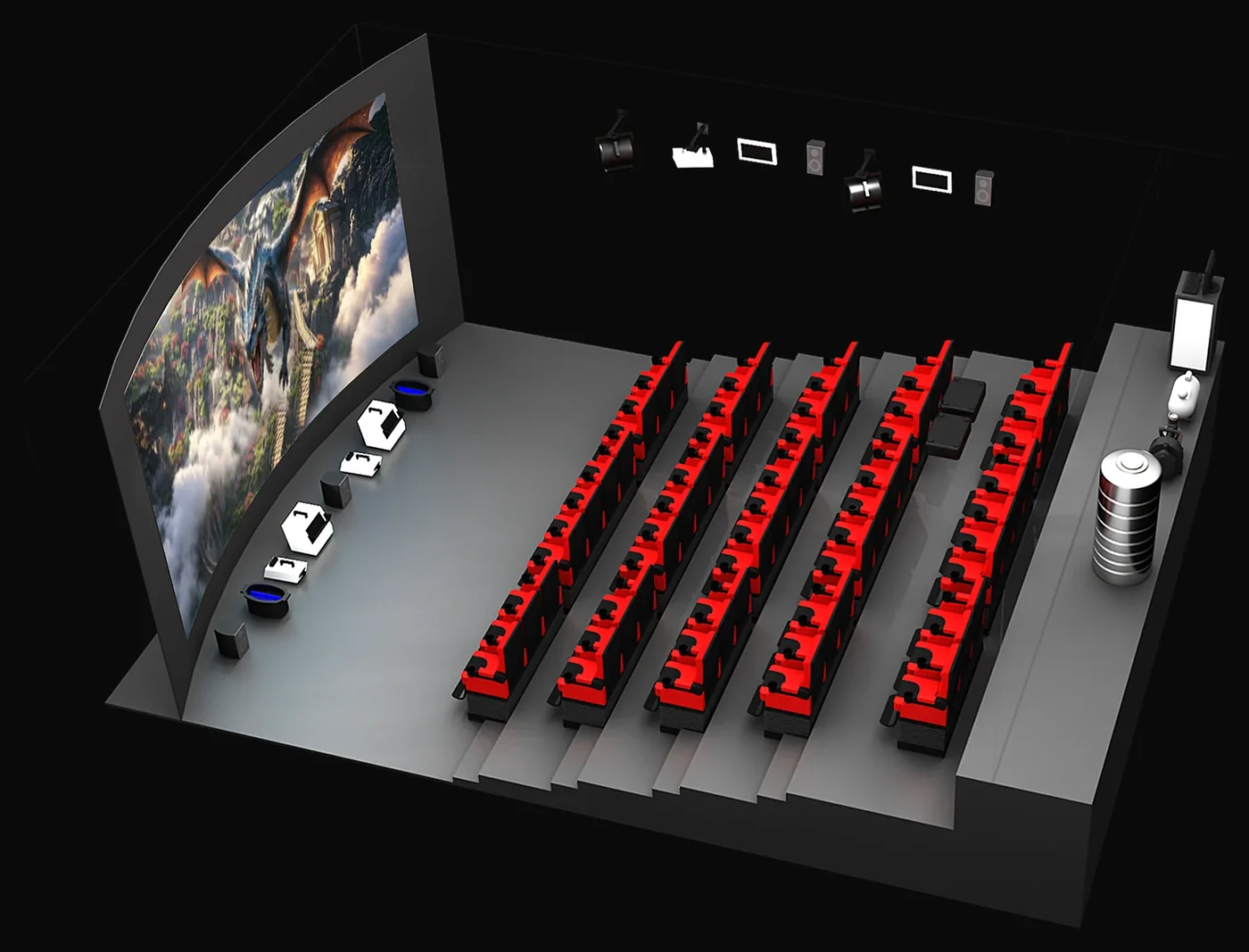
The cost of a flying theater or 5D cinema is the equipment quotation plus films, shipping, installation and the site works in your building, and the equipment part is set mainly by three options: seat count, screen and motion system. Waku quotes each project from your room size, seat count and country rather than from a price list, because these options change the price more than the product name does. To judge any quotation, set it against what the seats can earn: a 30-seat 5D flying theater at 20% average occupancy, with 5 shows an hour, 10 hours a day and a US$10 ticket, takes about US$90,000 a month in tickets.
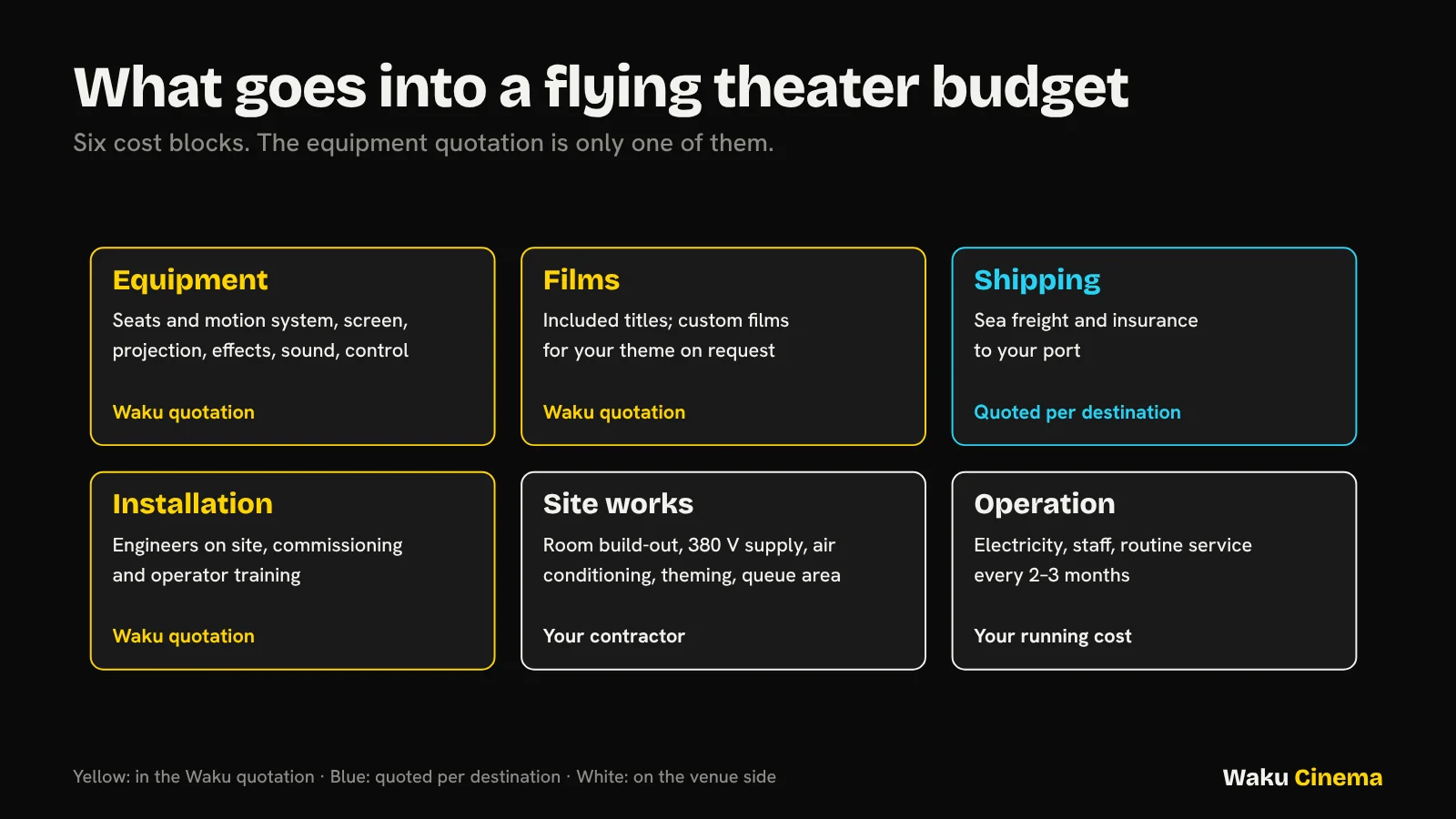
What is included in the cost of a flying theater?
| Cost block | What it covers | Quoted by | What changes it |
|---|---|---|---|
| Equipment | Seats and motion system, screen, projectors or LED, effects, sound, control system | Waku | Seat count, screen type and size, motion system |
| Films | Included titles; custom films | Waku | Number of custom films; the dome flying theater ships with 30 films, and updates are free |
| Shipping | Sea freight and insurance | Per destination | Destination port, volume |
| Installation and training | Engineers on site, commissioning, operator training | Waku | Model and location |
| Site works | Room build-out, 380 V supply, air conditioning, theming, queue and ticket area | Your contractor | The state of your building |
| Operation | Electricity, staff, routine service | Your running cost | Opening hours, local tariff |
Import duties and taxes depend on your country, so ask your customs broker for the rate on amusement equipment before you compare landed costs.
What sets the equipment price?
Within one model, the quotation moves with the options in the table below. More seats mean more motion platforms and effects; a larger dome or an LED wall means a bigger display; a 6-DOF platform has twice the actuators of a 3-DOF one.
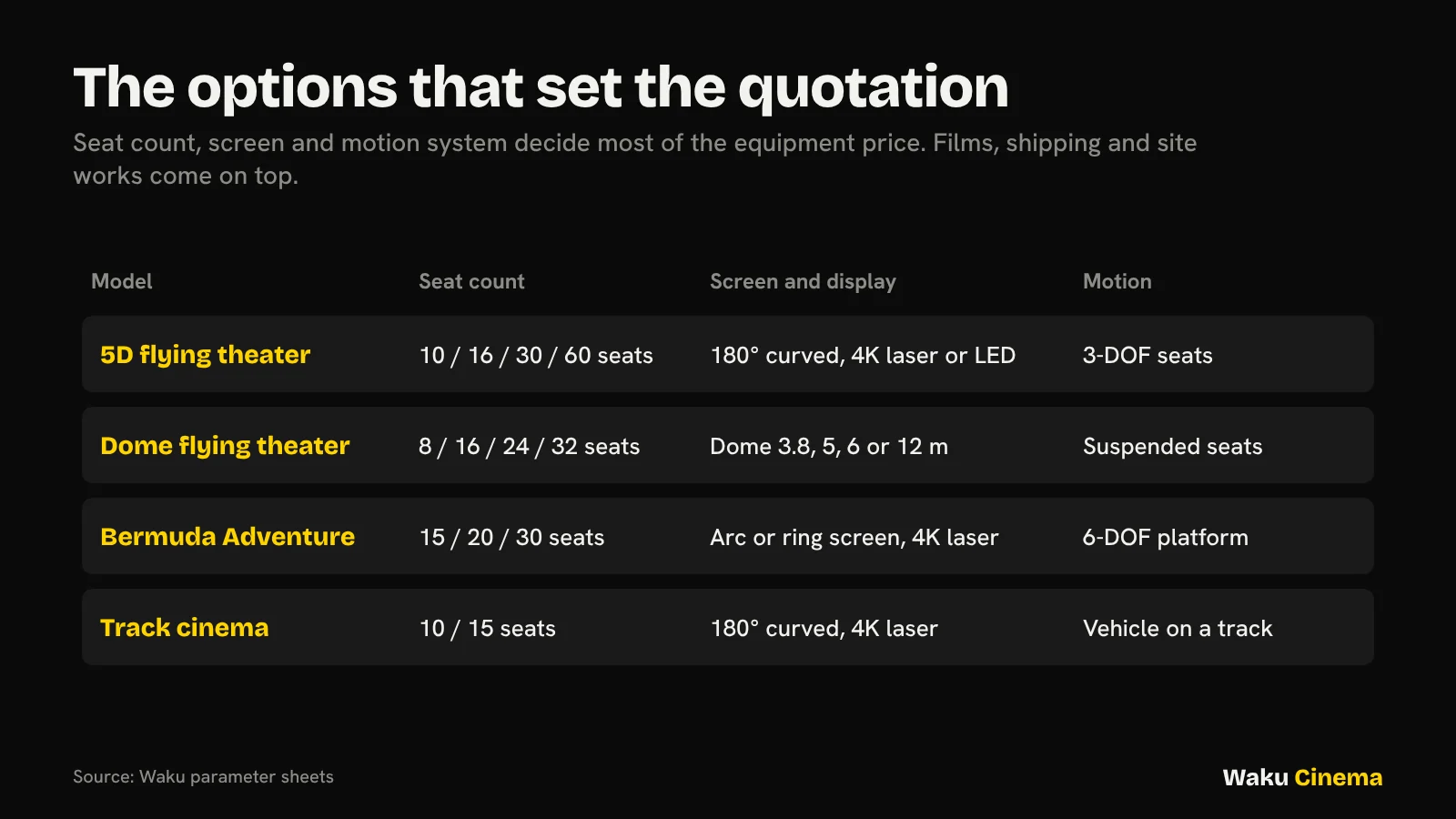
For a quotation you can compare, fix the seat count and the screen first, then ask each supplier to price the same configuration. Our guide to 3-DOF and 6-DOF motion platforms explains when the larger motion system is worth it.
Why do 4D, 5D, 7D and 9D cinema prices differ so much?
Because the names do not describe the same equipment. One supplier’s 9D cinema may be a few VR seats; another’s 5D cinema may be a 60-seat theater with a curved screen. Compare the screen, the seat motion, the effects, the seat count and the films line by line, as shown in what 4D, 5D, 7D and 9D mean, and the price differences become explainable.
What does a flying theater cost to run?
The largest running cost you can calculate in advance is electricity. Daily energy use is at most the rated power × opening hours; the real figure is lower, because the motion system does not run at full power for the whole show.
| Model | Power | Maximum per 10-hour day |
|---|---|---|
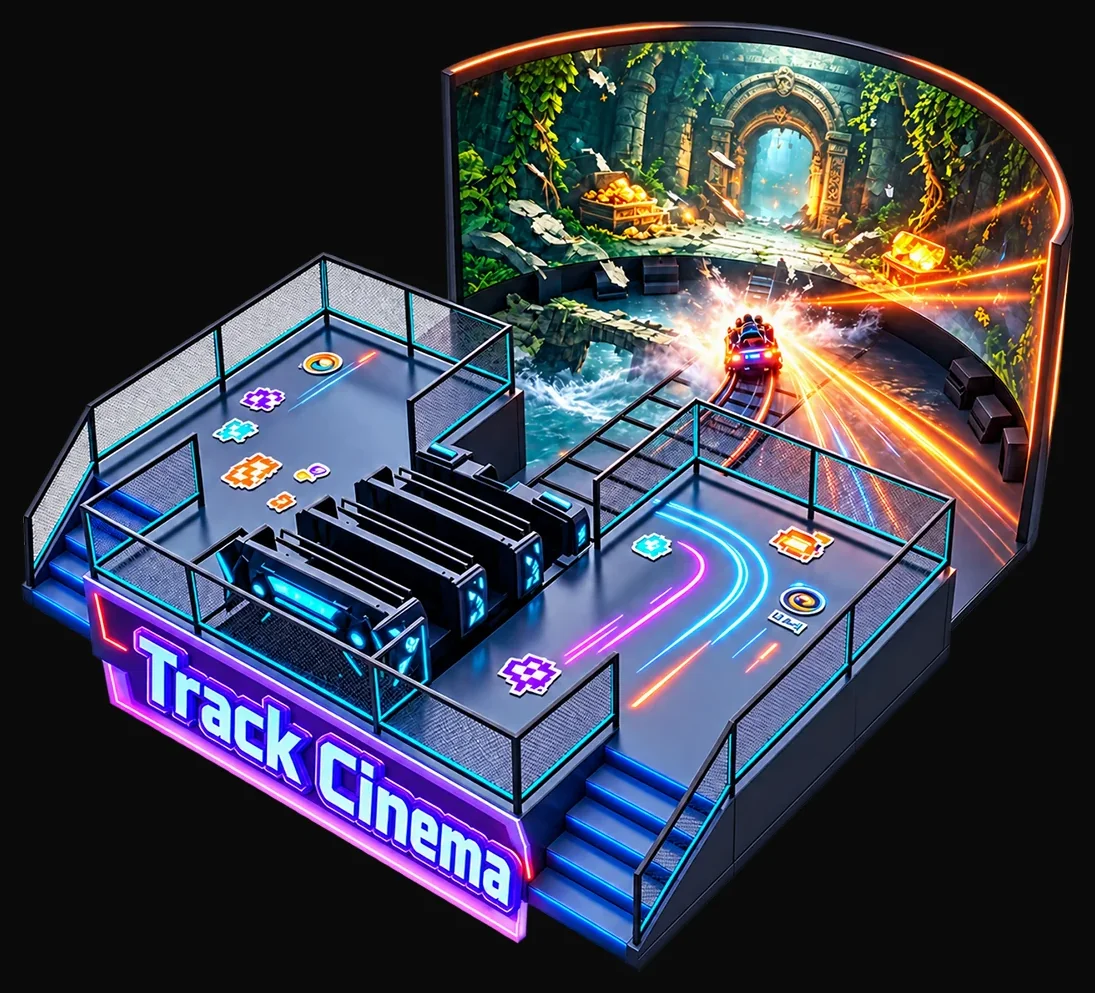
| Track cinema | About 10–15 kW | 100–150 kWh |
| Bermuda Adventure | About 12–28 kW | 120–280 kWh |
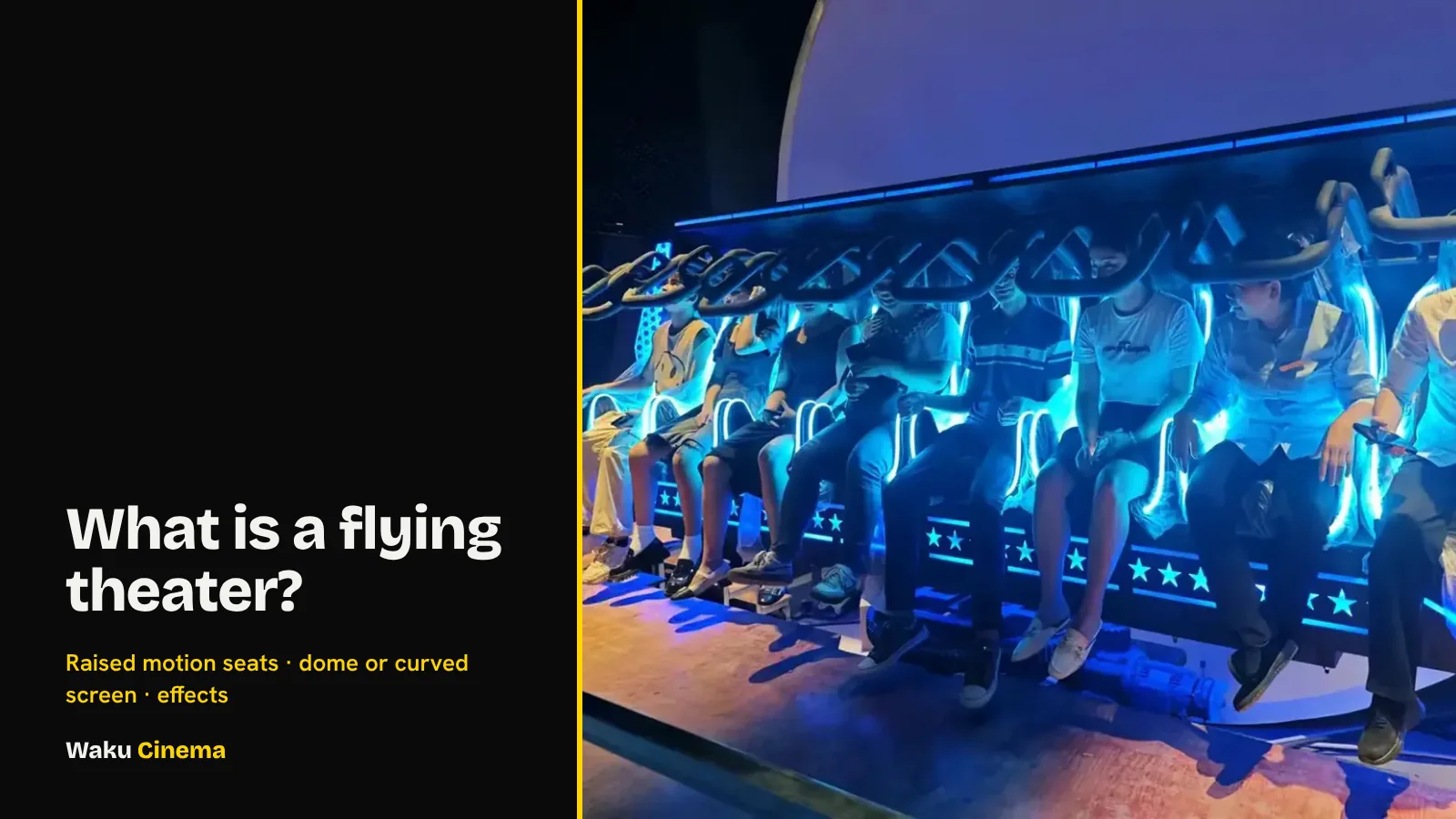
| 5D flying theater | About 10–45 kW | 100–450 kWh |
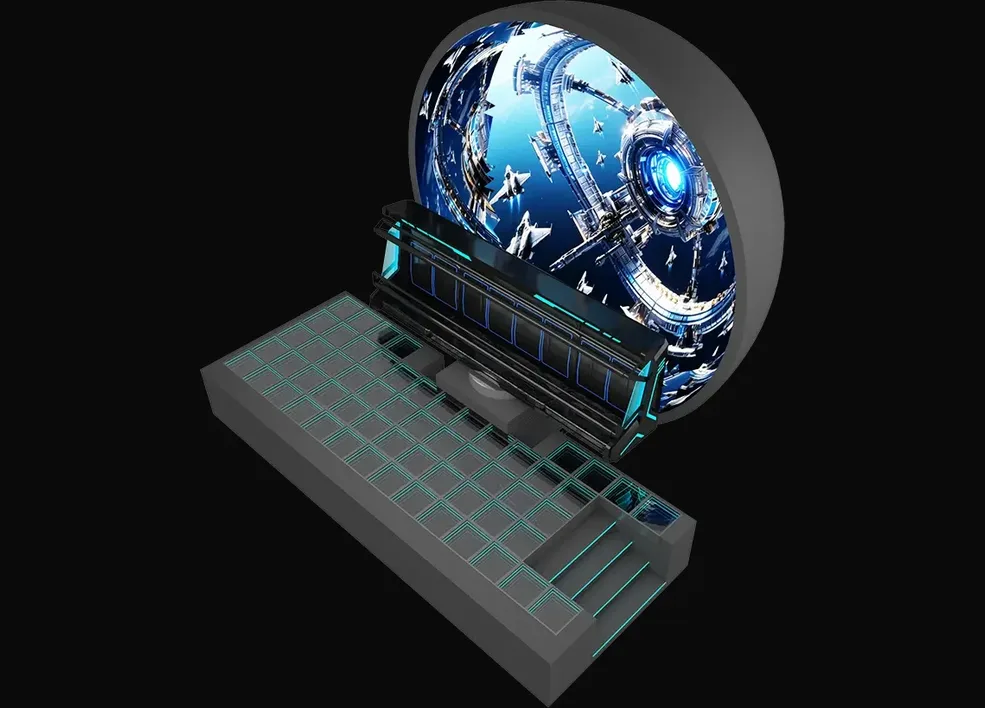
| Dome flying theater | About 20–60 kW | 200–600 kWh |
Multiply by your tariff: at US$0.15 per kWh, 280 kWh costs US$42 a day. Maintenance is light and done by your own staff: there is no scheduled wear-part replacement, bubble and snow fluid are consumables you top up, and every 2 to 3 months the motion-platform joints are greased and the bolts tightened. The warranty is one year. Details are in the maintenance guide.
How long does it take to pay back?
Payback in months = total investment (all six blocks) ÷ (monthly ticket revenue − monthly running cost). Ticket revenue = seats × shows per hour × opening hours × ticket price × days × average occupancy. The revenue guide works through the occupancy figures, and each product page has an estimator you can fill in with your own ticket price.
How do I get an accurate quotation?
Send us these six items and we will return a layout drawing with the quotation:
- Country and city of the venue
- Venue type: mall, theme park, museum, scenic area or FEC
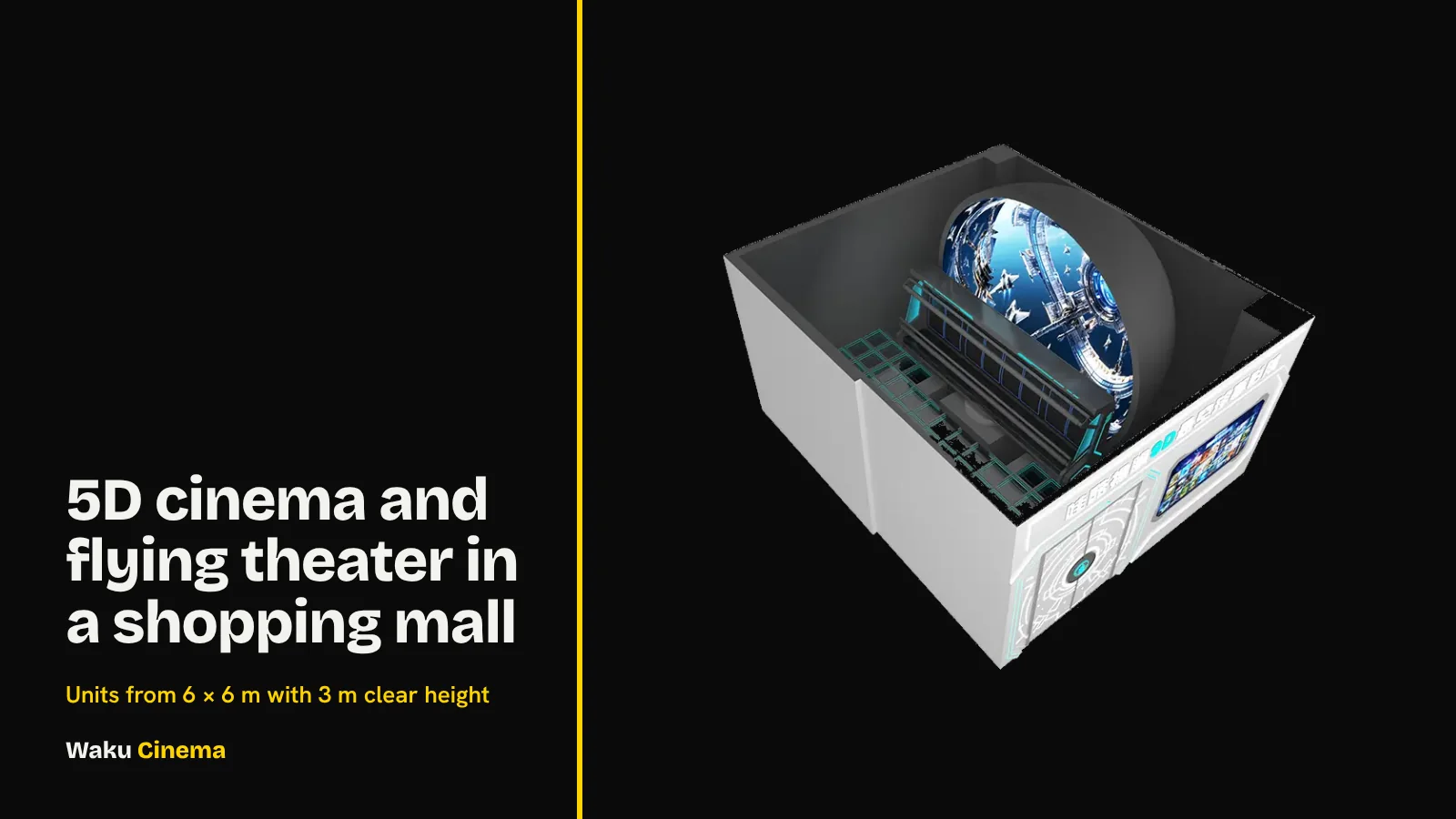
- Floor area and clear height of the room
- Seat count you want per show
- Local voltage and frequency
- Film themes you prefer, or a custom film
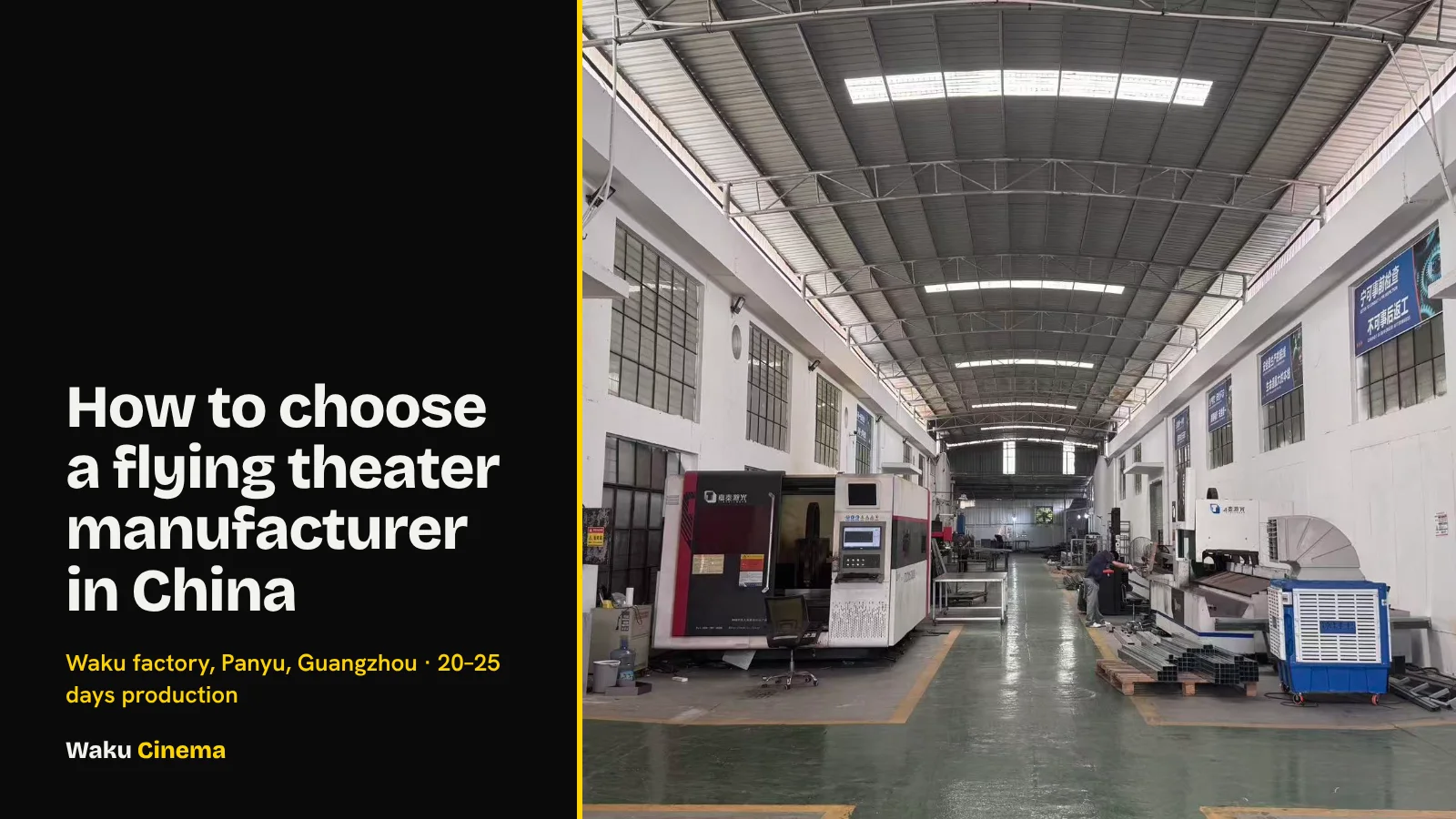
Production takes 20 to 25 days after the order, followed by shipping and installation.
Before you compare quotations, send every supplier the same list: our ten questions to ask a flying theater manufacturer makes the offers comparable line by line.
Shipping terms and payment are covered step by step in how to import amusement equipment from China.
Frequently asked questions
Does Waku publish a price list?
No. The price depends on seat count, screen and motion system, and on films and shipping, so we quote each project from your room size, seat count and country.
Is shipping included in the quotation?
Shipping is quoted for your destination port; tell us the port and we include sea freight and insurance.
Are films included?
Yes. The dome flying theater ships with 30 films, and film updates are free for all Waku theaters. Custom films are quoted separately.
What does a 5D or 9D cinema setup cost in my country?
The same six blocks apply everywhere; shipping, import duties, taxes and site works change by country. Send your city and we include shipping in the quotation.
How much power does a 5D cinema use?
The Waku 5D flying theater runs on 380 V at about 10 to 45 kW, depending on the configuration, so at most 100 to 450 kWh in a 10-hour day.
Talk to the factory
Tell us your country, venue size and ceiling height. We reply with a recommendation and a quotation.